


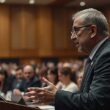
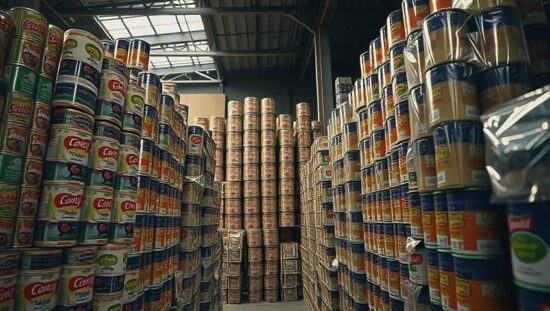
Federal Minister for Agriculture, Alois Rainer (CSU), announced plans to expand the state’s emergency food reserve. According to the political party member, the reserve must evolve beyond traditional stockpiles to include more immediately usable goods, such as canned provisions, which could be deployed directly during a crisis.
These necessary supplies should not be confined solely to federal warehouses. Instead, a consistent amount must be available directly at manufacturing plants and within the retail sector, such as in factory halls.
Rainer described this initiative as a targeted investment in Germany’s overall crisis preparedness. He stated that the initial funding required to establish this new system is €30 million. Once fully operational, the estimated annual cost is projected to be between €70 million and €80 million. To legally safeguard these funds, he intends to secure the amount through a type of “sectoral exemption” within the federal budget.
The minister addressed the handling of these goods, noting that since foodstuffs have expiration dates, the reserved products would eventually need to be returned to the market before spoiling. This requirement, he explained, would stimulate additional, fairly funded work in the logistics sector.
In response to skepticism that food corporations or retailers might profit unduly from these reserves, Rainer vigorously denied that the move amounted to privatization. He emphasized that the state must maintain responsibility for the population’s supply during a crisis. Utilizing the established infrastructure of the food trade is, therefore, a significant advantage, and the detailed rules will be established to regulate this process properly.
Separately, Rainer reminded the public of existing self-preparedness recommendations, advising that households should store non-perishable staple foods, ample water, and supplies tailored to individual needs.
He also called for efforts to strengthen the domestic production of fertilizers. He announced that the European Union is scheduled to present an action plan in May, which would include reducing tariffs on fertilizers to zero for all members, with the exception of Russia and Belarus. However, he clarified that, unlike strategic oil reserves, a dedicated fertilizer reserve is not currently necessary.