




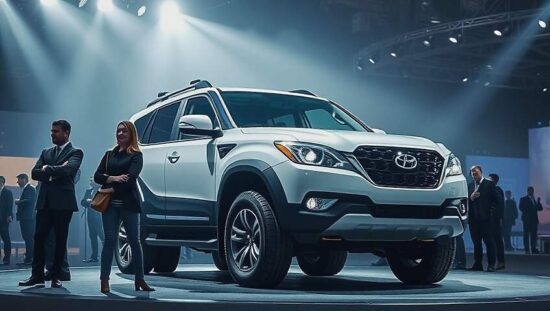
Scott Keogh, the head of US automaker Scout, announced new financial avenues for the VW-owned subsidiary. Keogh told the “Handelsblatt” that the entire Scout project was originally designed to be a venture that could either secure strategic investors or partners, or go public from day one.
He emphasized that Scout was built intentionally as a self-contained unit, and that securing outside capital remains an option. While he avoided naming specific companies, Keogh pointed toward US investment funds that are specifically focused on the “industrial renaissance” and the revitalization of the United States.
Keogh also addressed critical questions surrounding the project’s costs. Critics had noted a significant increase in the communicated costs at the beginning of the year, jumping from two to three billion dollars. Keogh explained this fluctuation as a communication misstep. He clarified that the initial two billion dollars communicated was merely a minimum commitment required to secure funding. The total budget, however, had always encompassed all necessary costs and was, he confirmed, “naturally fully approved” by the relevant bodies, meaning the VW Group in Wolfsburg.
Volkswagen is aiming to use Scout to increase its modest share of the US market. Internally, there have been questions about whether an entirely new electric vehicle subsidiary is necessary, especially given the slowing demand for pure EVs. Keogh countered this by stressing the focus on robust trucks and SUVs featuring a range extender system, noting that 87% of the more than 170,000 pre-orders were for this specific powertrain type. He described this technology as an “elegant, American solution”. Furthermore, he added that producing a new Audi model using the versatile Scout platform would also be viable.