




Despite the conflict in Iran, the Fraport group anticipates reaching its annual target of 65 to 66 million passengers at Frankfurt Airport, representing an increase of around four percent compared to 2025. Speaking to the “Frankfurter Allgemeine Zeitung”, Fraport CEO Stefan Schulte noted that while traffic from Frankfurt to the Middle East has decreased, it accounted for less than five percent of the total revenue. He added that seventy-five percent of these passengers were transit travelers continuing to the Gulf region, and many are now using alternative routes. Furthermore, direct passenger figures from Frankfurt to Africa and the Far East saw an increase of over 20 percent in March.
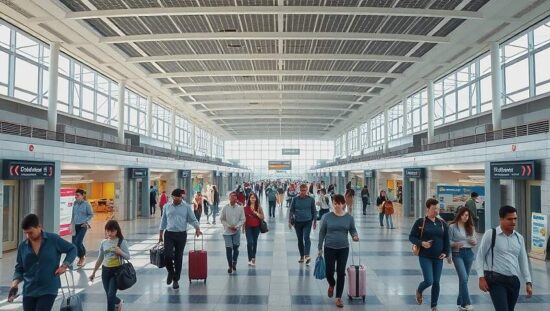
The inauguration of the new Terminal Three this Wednesday is timely. With the current passenger goal, the airport expects to achieve 95 percent of pre-pandemic levels. Schulte stated, “This brings us closer to pre-pandemic figures than any other major German airport. And even before COVID-19, our terminals were very full”. He explained that Terminal Three will contribute to more punctual operations across the entire airport. Currently, passenger operations for aircraft have been concentrated on the north side of the airport, whereas Terminal Three is located in the south. This separation will alleviate overcrowding and lead to improved punctuality.
Schulte does not foresee any negative impact from Lufthansa’s decision to invest in expanding Munich Airport. He anticipates that Lufthansa will continue to expand, particularly in Terminal One at Frankfurt. According to Schulte, the airlines in the Star Alliance network will utilize both Terminal One and the modernized Terminal Two. In contrast to Munich, where Lufthansa and the airport operate in a joint venture, this arrangement is not happening in Frankfurt. Schulte revealed that after discussion, they decided against it, adding that Lufthansa fundamentally prefers investing in new aircraft rather than in steel and concrete.