




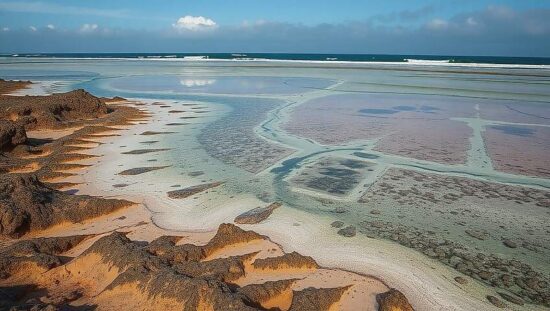
Groundwater found near coastlines, which serves as a vital drinking water source for numerous regions, faces global threats from salinization. This finding came from a study conducted by the Institute of Geography at Johannes Gutenberg University Mainz (JGU) and the Climate Service Center Germany (GERICS) in Hamburg, and was published in the academic journal “Nature Water”.
The research indicates that over 20 percent of the studied coastal areas experienced significant changes between 1990 and 2024. In some locations, the groundwater level dropped by more than 50 centimeters annually. This decline points to over-extraction, which increases the potential for seawater intrusion and subsequent salinization.
Based on data from approximately 480,000 wells, the study warns that arid regions heavily dependent on groundwater, as well as areas where the groundwater table is close to sea level, are particularly vulnerable. Steep declines in water levels have been documented across the coasts of the USA, Central America, the Mediterranean region, South Africa, India, and southern Australia.
According to the researchers, all coastal areas globally could face drinking water shortages within the next 50 years. The consequences of this issue are expected to affect not only the water supply for more than 30 percent of the world’s population but also local food production and entire ecosystems.