




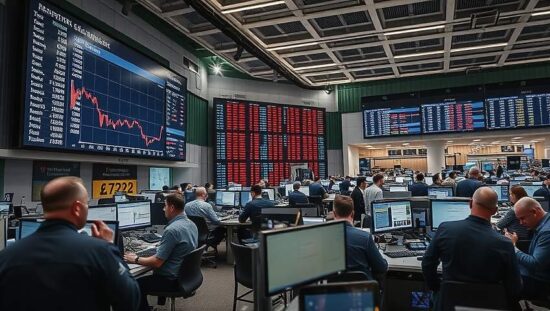
The German stock index, the DAX, opened the Tuesday trading day with losses. At 9:30 a.m. the index was calculated at about 22,560 points, down 0.4 % from the previous closing level. In the top of the market list were Zalando, BASF and FMC; at the bottom were Bayer, SAP and Heidelberg Materials.
Consorsbank’s chief market analyst, Jochen Stanzl, said that the events in the DAX over the last 24 hours “clearly show where the path is going when the Strait of Hormuz remains closed”. He added that the day‑to‑day swings in DAX prices are likely to intensify. “The markets are more focused on the number of ships passing the Strait of Hormuz than on sensational statements from the U.S. President” Stanzl explained. “Whether or not people believe in a so‑called Taco‑Trade, the U.S. President cannot unilaterally end the war with all its consequences for energy prices and the global economy as long as Iran does not cooperate”.
Stanzl also expressed uncertainty about how far U.S. diplomatic contact reaches into the new structure of the Iranian regime and whether serious talks are even taking place. He noted the possibility that Saudi Arabia could become an active war participant. “If Saudi Arabia joins the conflict, it would be an additional escalation of the Iran war. Investors look for a way out of the war, not for further signals that pull us deeper into what feels like an escalating spiral”.
He described yesterday’s market move as a “technical counter‑reaction”. “A market bottom in the DAX can only occur if volatility fades and oil prices fall” Stanzl said. “For a bottom to form, prices must calm down; after such a calm period, the DAX still does not appear to be ready”.
In currency markets the euro was slightly weaker early on Tuesday: one euro = 1.1594 U.S. dollars, and one U.S. dollar = 0.8625 euros.
Meanwhile, oil prices rose significantly. At 9:00 a.m. German time a barrel of North Sea Brent crude traded at US$101.30, a 1.4 % increase from the previous closing price.