




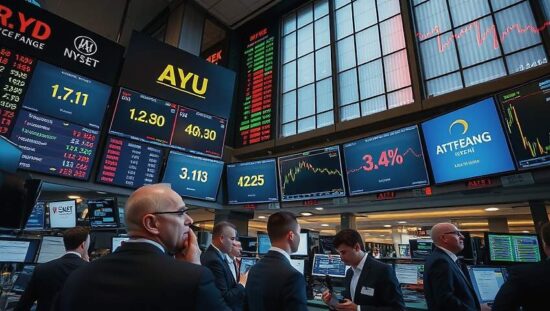
The German markets opened on Monday morning with steep losses. By 9:30 a.m. the DAX traded at about 23,025 points, a 2.4 % drop from Friday’s close. The top of the daily price list featured Munich Re, Siemens Healthineers, and FMC, while Siemens Energy, Continental and Infineon lagged at the bottom.
Energy prices remained under pressure at the start of the week amid the continuing conflict in the Middle East. Oil prices jumped sharply; by 9:00 a.m. at German time a barrel of North Sea Brent traded at $107.80 – up 16.3 % from the previous day’s close. Gas prices also spiked, rising over 28 % at market open before settling at around a 14 % gain.
In the European wholesale market, April delivery of a megawatt‑hour cost up to €68 early in the morning. This translates to a consumer price of between 12 and 15 cents per kWh, including taxes and fees.
Thomas Altmann of QC Partners cautioned that, while the Strait of Hormuz is closed, there is virtually no hope for a decline in oil prices. “Many Gulf states have already drastically cut production. Without the Strait of Hormuz, significantly less oil reaches Asia and Europe”. Statistics showed that no oil tanker passed through the Strait of Hormuz towards the west in the past seven days – a first in the data collection period.
Altmann added that the oil market currently faces steady demand against a markedly reduced supply, inevitably driving prices higher. “If oil prices remain elevated for an extended period, this will negatively affect global economic growth” he said. “The oil price is the point at which the Iran war impacts the entire world”.
Concerns grow that an oil shock could fuel a major surge in inflation. Analysts expect central banks to counter this with rate hikes. “The probability of an ECB rate increase by October is priced at 93 %” the analyst noted. This, in turn, erodes confidence in government bonds as a safe haven. “Fear of inflation and further rate rises is causing investors to steer away from sovereign debt”.