




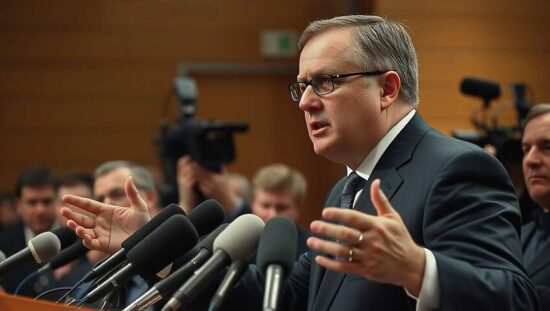
Roderich Kiesewetter, a CDU politician known for his work on foreign affairs, took an unusually sharp stance against the United States’ recent approach to security and diplomacy. Speaking to Der Spiegel, he stated that he has long argued that Americans have abandoned rule‑based order.
The comment came a day after German Chancellor Friedrich Merz visited President Donald Trump at the White House, a visit in which Merz visibly sought a partnership with Washington. Kiesewetter, however, adopted a very different tone. He pointed to the U.S.’s new foreign‑policy and security strategy, saying, “I no longer trust Americans because even in their new National Security Strategy and Defence Strategy they are extremely volatile”. He added, “That is why I cannot wholeheartedly say: Class, what the Americans are doing”.
Despite his criticisms, Kiesewetter defended the U.S. and Israeli strikes on Iran. He described Tehran’s regime as an existential threat to Israel that also oppresses its own citizens, and therefore considered the military actions justified-despite his overall skepticism of the American course.
In Germany, Green Party Bundestag member Max Lucks sharply condemned the domestic debate on Iran. He warned that Germans talk too much about principles and not enough about the Iranian people, noting that discussions of whether Trump is acting in accordance with international law do nothing to stop executions. Lucks said that while international law matters, it is essential to adopt the perspective of those oppressed by the regime-those who want a regime change. He noted that it seems the German conversation is driven by fear of an Iran without the Mullahs, and urged more courage to discuss what a post‑Mullah future could look like.
Lucks also criticized statements by former foreign minister Annalena Baerbock, now president of the UN General Assembly. Baerbock had emphasised compliance with international law and the UN charter. Lucks argued that a former foreign minister should recognize how difficult it is to protect Iranian civilians at the UN, and that a modest self‑critique regarding the UN’s failure to safeguard them would have strengthened her position.