




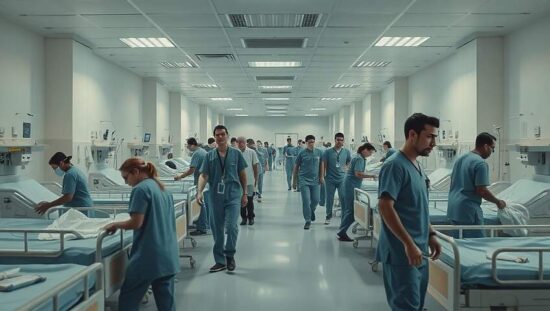
In an open letter addressing the federal government, the works councils representing over 20 hospital groups and university clinics have issued a stark warning regarding severe consequences for nursing if the reform proposals put forth by Health Minister Nina Warken (CDU) are implemented in their current form.
According to reports from the “Funke Media Group” newspapers, these plans are predicted to have massive negative effects on the daily work of medical professionals-those who provide care in wards, specialized units, diagnostics, therapy, service, technology, and administration. The letter was addressed not only to Health Minister Warken but also to Chancellor Friedrich Merz (CDU), Deputy Chancellor Lars Klingbeil (SPD), Labor Minister Bärbel Bas (SPD), and the chairs of the ruling parliamentary factions. The signatories warned that “all successes of recent years in making the healthcare sector more attractive as a place to work stand to be undone”.
The core of the concern lies with Minister Warken’s intention to cap the nursing budget introduced in 2020, and to restructure funding so that wage increases for nursing staff are no longer fully subsidized. Under this model, hospitals themselves would have to absorb these additional costs, a financial burden already deemed challenging given the current strained economic environment.
Frank Werneke, Chairman of the Verdi trade union, warned that the situation in caregiving could deteriorate, with the threat of closures looming for some facilities. He noted that understaffing is already a common problem in care units. Werneke predicted that capping the nursing budget would cement existing understaffing issues and exacerbate them in the coming years.
Crucially, if wage subsidies were withdrawn, hospitals would have no choice but to implement staff reductions. “This pushes the goal of providing care based on actual needs even further away” Werneke stated. He emphasized that this would equate to lower care quality for patients, coupled with increased pressure and stress for the staff. He fears this spiraling pressure could lead to more nurses leaving the profession permanently, trapping the sector in a “vicious circle” that authorities had previously begun to break.
The trade union official added that many facilities are already financially unstable, suggesting that the proposed plans could lead to closures on a large scale.
The letters were co-signed by the employee representatives of facilities including Helios Kliniken, Charité, and the university clinics in Essen, Göttingen, and Magdeburg. Collectively, the represented works councils represent approximately 323,000 employees.