




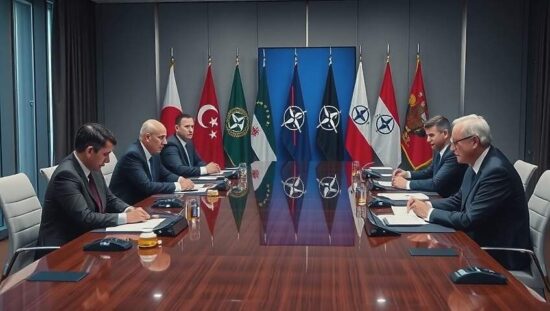
German Foreign Minister Johann Wadephul (CDU) plans to propose a new framework at a meeting with NATO colleagues in Helsingborg designed to ensure long-term financial support for Ukraine’s defense efforts.
According to reports, Wadephul’s proposal aims to secure the perpetual financing required for Ukraine’s defensive war efforts. In exchange for supporting this mechanism, NATO partners would gain access to the significant achievements of the Ukrainian arms industry. The German minister envisions that this structured system be adopted at the NATO summit in Turkey this July, though participation from the United States would not be included.
The current financial situation requires supplemental measures. While the EU has provided a €90 billion credit designed to cover two-thirds of Ukraine’s financial needs for the next two years, a substantial funding gap remains, estimated at around €40 billion within the NATO headquarters in Brussels.
The purpose of the German initiative is twofold. First, it intends to establish formal measures, such as dedicated monitoring, to ensure that financial pledges made by donor nations to Ukraine are actually fulfilled. Second, Wadephul seeks to raise additional funds by broadening the financing sources, while carefully considering the economic capacity of various member states. Simultaneously, the German government intends to encourage greater participation from other states that have thus far been hesitant to guarantee financial aid.
As compensation for their cooperation, member states would benefit from evolving developments in the Ukrainian defense industry. Sources indicate that several Gulf states have requested Ukraine’s assistance in defending against Iranian missiles and drones, expressing high levels of satisfaction with the aid provided. Furthermore, Ukrainian drones and missiles are reportedly making regular strikes on targets deep within Russia’s interior.
Across Europe, sophisticated weaponry systems with long ranges are already under development. Given that the U.S. recently canceled plans to station intermediate-range weapons in Germany, there is a considerable requirement to rapidly accelerate defense readiness and capability development. To this end, Germany is already working on integrating supply chains more closely with Ukrainian defense manufacturers.