




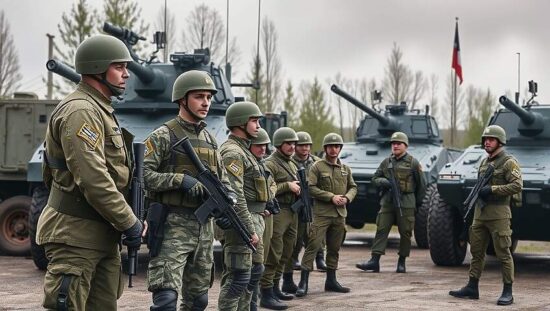
The Ministry of Defence is generally content with the personnel development within the Bundeswehr but declined to specify whether the current growth trajectory will be sufficient to prevent the reinstatement of mandatory military service. According to a Ministry spokesperson speaking to the dts news agency on Wednesday, the final decision rests with more than just the Defence Ministry. The spokesman noted that if the issue were raised-whether due to the existing security situation or simply the military’s growing needs-it would necessitate a major political process involving new parliamentary and legislative procedures.
While acknowledging the political complexity, the spokesperson highlighted the positive numbers, pointing to double-digit percentage growth in both enlisting personnel and applications. He noted that the seasonal drop seen in the spring is over, characterizing April as a particularly strong recruitment month. He expressed confidence that if this growth continues, the Ministry will achieve its personnel targets both this year and in subsequent years.
This positive outlook followed the Ministry’s earlier report on the Bundeswehr’s personnel figures for April. According to the data, the total number of soldiers currently stood at approximately 185,900, representing an increase of over 3,400 individuals compared to the previous year. However, the total strength increase compared to the immediately preceding month, March, was relatively modest, rising by only about 500 soldiers.
More specifically, the force recorded a cumulative plus of 11% in new enlistments year-to-date (as of April 30) compared to the previous year. For the month of April alone, 3,700 enlistments were reported-a significant jump from the roughly 500 recorded in March. Furthermore, the number of applications for a military career reached 28,800 by the end of April, marking a 21 percent increase compared to the same period last year.
These reports contribute to the Bundeswehr’s long-term strategic goals: the active military component aims to reach 260,000 personnel by the mid-to-late thirties. Simultaneously, the reserves are planned to undergo a parallel increase, expanding from the current figure of around 70,000 to a minimum of 200,000 individuals during the same period.