


Bestselling author Peter Wohlleben has warned the public about several common hygiene practices, suggesting many prevailing rules are inaccurate or overly alarming. Speaking to the “Neue Osnabrücker Zeitung”, Wohlleben first pointed out that a major area of incorrect habit is how people flush toilets.
Regarding bathroom safety, he highlighted aerosols as the primary danger. When flushed, these units raise air bubbles that can loft bacteria into the air, staying active for up to six hours. Wohlleben advised that anyone using a public restroom midday must be prepared to inhale any bacteria dispersed since early in the morning. Conversely, he dismissed concerns over toilet seats, calling them exaggerated. He noted that while people often feel grossed out by them, the amount of bacteria per square centimeter is surprisingly low-a burden much higher on gym equipment, which, he stated, carries up to 400 times more bacteria.
His key recommendation for better protection is to always close the toilet lid before flushing, a simple action that can reduce potential bacterial exposure by a factor of 14. Wohlleben also criticized the poor design of public facilities, questioning why motorway rest stops lack lids entirely. He noted that train toilets, such as those on the ICE, are superior because they are vacuum-sealed and do not stir up dust or air.
Beyond the bathroom, Wohlleben stressed the necessity of major changes in household hygiene, particularly in the kitchen. He strongly suggested replacing washing sponges with brushes. Sponges can harbor up to a billion bacteria within their damp pores, and even soap or dishwashing liquids cannot effectively kill them. A brush, in contrast, dries out easily and is safe for use in a dishwasher.
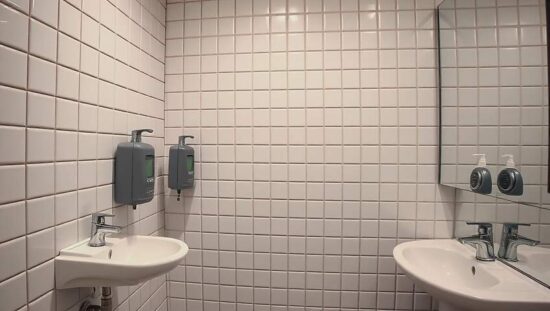
Furthermore, he criticized modern soap dispensers with pump caps. He warned that these devices suck air and, along with it, bacteria every single time they are activated, meaning that each hand wash could potentially spread a small portion of bacteria.
Wohlleben summarized his warnings, which are based on current scientific studies of microorganisms, drawing from his published book, “Bacteria – die heimlichen Helden”.