




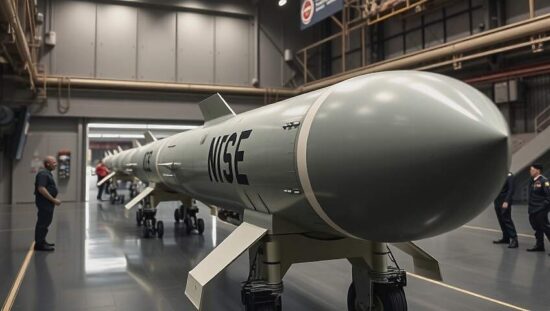
German Foreign Minister Johann Wadephul (CDU) stated that Germany remains committed to acquiring Tomahawk cruise missiles from the United States. According to “Welt am Sonntag”, Wadephul emphasized that the federal government is actively working to improve Germany’s defense capabilities and is maintaining intensive dialogue with its allies in the US on this topic. Dealing with Washington, the government is consequently discussing the acquisition of Tomahawks. The minister expressed confidence that NATO’s deterrent capability will be preserved.
Wadephul addressed the historical complications surrounding these weapons, noting that the deployment of the long-range system-initially promised by Joe Biden and halted after criticism from German Chancellor Friedrich Merz regarding the Iran war-was a subject of recent debate involving former US President Donald Trump.
He aims to reconcile any recent tensions with the US, stressing that Germany and the US share many common interests, particularly concerning Iran. These shared goals include preventing Iran from becoming an atomic power, halting its missile program development, and stopping its destabilizing activities in the region. He warned that Iran’s actions pose a threat not only to Israel but also to Europe and to Europe’s economic ties, specifically citing the shipping routes through the Red Sea. Wadephul also noted his relationship with US Secretary of State Marco Rubio, describing their collaboration as “constructive and friendly” and affirming that the United States remains an indispensable ally, both economically and in terms of security.
In other matters, Wadephul highlighted the government’s readiness to dispatch mine-sweeping naval vessels to the Strait of Hormuz. He stated that such an operation would require a formal mandate, either from the United Nations or the European Union. While calling a UN Security Council mandate the “optimal path” he mentioned alternatives, such as expanding existing missions like Aspides in the Red Sea or establishing new EU mandates. He underlined that Europe has substantial economic and security interests in maintaining free sea lanes. He cautioned that a successful sweep of the Strait of Hormuz would be a complex, multi-week process, not a quick or short-term project.