




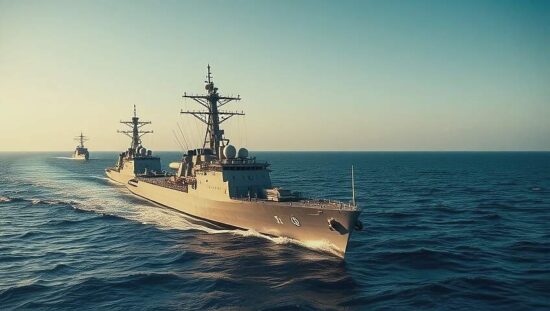
Defense Minister Boris Pistorius announced the transfer of German navy units to the Mediterranean Sea in preparation for a potential deployment in the Strait of Hormuz. Speaking to the “Rheinische Post” (Saturday edition), Pistorius stated that they plan to move a mine-hunting vessel and assign it an accompanying command and support ship. He added that to support operations in the Strait of Hormuz, they would need to temporarily and sensibly reduce current commitments in other areas, coordinating these adjustments with international partners.
The Minister emphasized that any engagement in the region requires a mandate from the German Bundestag. He explained that to save time, the government has decided to preemptively move a portion of the German units to the Mediterranean, thereby avoiding delays once the necessary parliamentary mandate is secured.
Pistorius drew a parallel to when the EU naval mission Aspides was launched in the Red Sea, noting that he had proactively sent the participating frigate to the Mediterranean anticipating the EU decision and the Bundestag’s mandate. According to the Defense Minister, this foresight significantly accelerated the start of the mission. He asserted that the German Navy possesses highly capable mine detection and clearance skills and that these capabilities would be essential for contributing to a safe and free navigation within the Strait of Hormuz.
Beyond the need for a Bundestag resolution, Pistorius reiterated other conditions governing a German naval deployment in the Strait of Hormuz, noting foremost that hostilities must cease.
Concerning potential international mandates, Pistorius considered expanding the existing mandate of the EU mission Aspides. He described this as an appropriate and feasible option, adding that while a UN mandate would be ideal, it is currently unlikely. He noted that the current geographical mandate of Aspides already covers the Persian Gulf. However, the units are currently restricted only to defending against threats to civil shipping in the Red Sea, using military means. Therefore, the legal framework of Aspides would need to be adjusted. Pistorius also pointed out that key partners, including the British forces and American naval personnel, are not presently included under this framework, and if they were to participate, the Bundestag would still need to make a decision.