




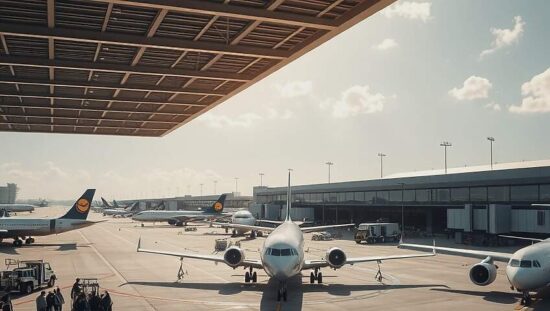
German Chancellor Friedrich Merz (CDU) intends to continue banking on growth within the aviation sector, even in the face of the challenges posed by climate change. Speaking at the centenary celebration for Lufthansa on Wednesday, Merz stated that air travel has been a growing industry for the last century and is expected to remain so. According to his projections, global air traffic could double by 2050, a trend the industry must prepare for by establishing conditions that allow it to participate in this growth.
Merz pointed out that realizing this growth requires sustainable, climate-friendly technologies, alongside necessary reforms and lower costs. The aviation sector is recognized as difficult to decarbonize. While some of the climate impact can already be lessened by adjusting flight routes, global reports, such as those from the IPCC, indicate that the sector needs to transition towards biofuels, synthetic fuels, hydrogen, and electric propulsion. Currently, these alternatives are significantly more expensive than conventional kerosene, which could potentially dampen demand.
The Chancellor announced that the federal government plans to present its air transport strategy at the international air and space exhibition in the summer. A key focus of this strategy will be to better leverage the existing synergies between civilian and military aviation.
Separately, Merz welcomed Lufthansa’s decision to investigate its past during the Nazi era. The CDU politician remarked, “Lufthansa’s history is more than just a corporate history; it is part of German history”. He acknowledged that Lufthansa had a long relationship with the state and that the airline was involved in the Nazi regime, even profiting from the war. Merz highlighted that Lufthansa utilized “thousands of forced laborers under inhumane conditions” and stated, “I therefore expressly welcome that, on the occasion of this anniversary, Lufthansa is now addressing this part of its history”.