




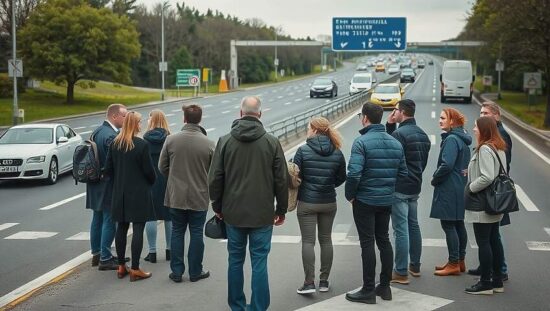
A slight majority of Germans favor implementing a temporary speed limit as a way to reduce energy consumption. According to a survey by Forsa on behalf of “Stern” and RTL, 51 percent of citizens support setting a temporary maximum speed of 120 km/h on motorways and 80 km/h on rural roads. In contrast, 48 percent oppose this limitation, and 1 percent were undecided.
Support for the idea differs significantly between genders: most women (63 percent) endorse a temporary speed limit, while only 37 percent of men do. Age groups and political affiliation also show distinct patterns. Over 60-year-olds show strong support, with 62 percent in favor. However, only a minority of those aged 30 to 59 support the measure, while those under 30 are split on the issue, similar to the general population.
Among political groups, the Green Party and The Left are the most supportive, with 82 percent each in favor. Conversely, the AfD supporters show the least agreement at only 19 percent. Sixty-two percent of SPD supporters favor the measure, while the CDU/CSU members are divided on the issue.
Experts suggest that a speed limit could lower fuel consumption for both gasoline and diesel, thereby helping to reduce fuel costs, given the context of the conflict in the Middle East. The idea was previously proposed by economist Veronika Grimm, who advocates for such a measure to combat the energy crisis. Grimm, who serves on the Advisory Council for Economic Research, stated that current efforts to lower fuel prices have been insufficiently effective.
Currently, Germany is the only country in the EU without a general speed limit on its motorways, and it is also an exception globally. Support for an imposed speed maximum comes from the SPD, the Greens, and The Left, while the CDU/CSU, AfD, and FDP reject it.