




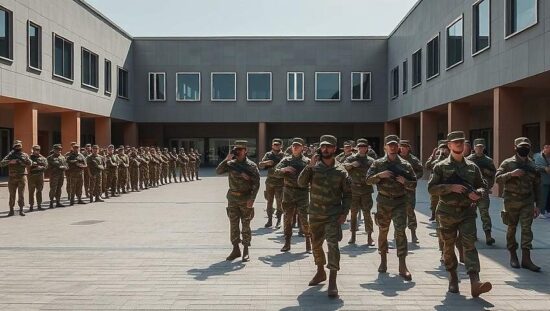
Patrick Sensburg, president of the Reserves Association, criticized deficiencies in the support provided to reservists by the German armed forces and demanded improvements. Speaking to the “Redaktionsnetzwerk Deutschland” he noted, “We have many interested individuals, but they cannot enter the system because the processes are too slow”. He expressed a desire for faster improvements, starting with the security vetting process. Sensburg added that the reserves need to be properly recorded and managed, emphasizing the necessity of long-term planning security for reservists, as canceled exercises often happen at short notice.
Separately, the head of the Reserves Association stated that the planned increase to 200,000 reservists, proposed by the Ministry of Defense, was insufficient in his view. He argued, “For us to become resilient, the reserve must be three times the size of the active forces”. This would necessitate a size between 800,000 and 900,000 troops. According to a report from the Bundestag’s Military Representative, Henning Otte (CDU), approximately 60,000 reservists were recently assigned to specific duty posts.
A new military service law, effective at the beginning of January, dictates that the active military will grow from its recent figure of about 184,000 soldiers to 260,000 by 2035, while the reserve is slated to increase to 200,000. Under this framework, personnel who serve voluntarily for a minimum of six months will automatically be assigned to the reserve, unless they are designated as time or career soldiers.
A spokesperson for the Ministry of Defense told the RND that the new “Reserve Strategy” is in its final phase. They stated they would provide further updates in April, following approval by the Federal Minister and notification to Parliament. Furthermore, Defense Minister Boris Pistorius (SPD) had previously announced in the Bundestag at the end of February that a Reserve Strengthening Act would be introduced sometime that summer.