



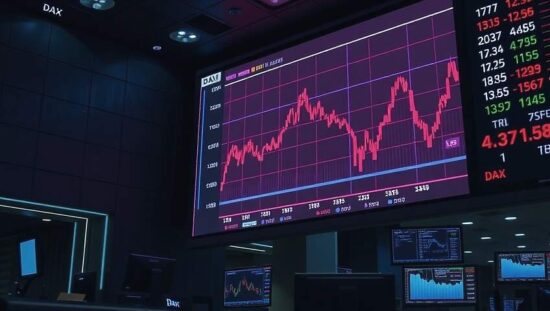
At around 12:30 pm German time on Thursday, the DAX slipped further into red territory, trading at 22 825 points-about 2.0 % below the previous day’s closing level. In the top of the list the largest gains were seen by Eon, Deutsche Börse and Brenntag, while the lowest performers were Deutsche Telekom, Infineon and Siemens Energy.
CMC Markets’ chief market analyst, Andreas Lipkow, warned that investors are currently grappling with a bundle of uncertainties. He said it is hard to judge the medium‐ to long‑term effects of the Middle‑East conflict on supply chains, prices, inflation and the broader economy. “Oil prices remain high, staying well above $100 a barrel in a critical zone” Lipkow added. “Fertiliser prices have also surged, which already drives significant price increases for certain food groups in the wholesale market”.
Lipkow also noted that central banks are in an uncomfortable position, with little room for rate adjustments. “Rate cuts could fuel inflation, while rate hikes would slow the economy” he explained.
Despite the volatility, Lipkow believes the DAX remains surprisingly steady, largely because optimism about a swift normalisation of conditions supports the markets. “The nervosities are mainly easing in precious‑metal prices and in a few equity sectors” he said. “Yield‑sensitive firms such as banks and technology stocks are in the red, whereas energy players and defensive industry stocks are in demand”.
At noon on Thursday, the euro weakened against the dollar, trading at $1.1516 per euro, and one U.S. dollar was worth €0.8684.
Meanwhile, Brent crude rose sharply, reaching $108.40 a barrel at about 12:00 pm German time-a 7.2 % jump from the previous day’s close.