




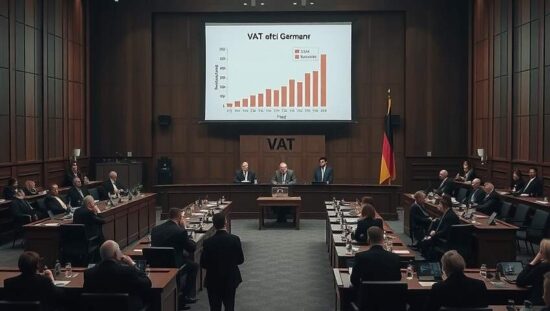
In the debate over a VAT reform, the federal states are pressing the shadow coalition for tax relief for citizens.
Saxony-Anhalt’s premier, Sven Schulze (CDU), told “die Welt” that, “the reality is that prices – especially food – remain high for many people”. He added that citizens rightfully expect concrete relief and that the federal government must act now, delivering a clear plan for noticeable de‑leveraging. Schulze called for a “coordinated, comprehensive package” that moves decisively, rather than a continual back‑and‑forth of piecemeal proposals.
The finance ministers of North Rhine‑Westphalia and Baden‑Württemberg, Marcus Optendrenk (CDU) and Danyal Bayaz (Green), echoed this sentiment. They warned that the complex economic situation – rising prices, uncertain energy developments and mounting burdens on many households – cannot be tackled by isolated tax adjustments. Optendrenk emphasized the need for a “coherent overall concept” that blends relief, targeted measures and fiscal sustainability. Bayaz urged the federal government to settle quickly on a comprehensive reform package to strengthen Germany’s growth engines and stabilize social safety nets.
Saarland’s premier, Anke Rehlinger (SPD), also demanded action. She argued that the inflation expected from the Iran conflict should be countered by making food cheaper, either through a reduction or elimination of VAT. In return, she proposed cutting useless tax discounts on luxury items such as truffles, caviar and oysters.