




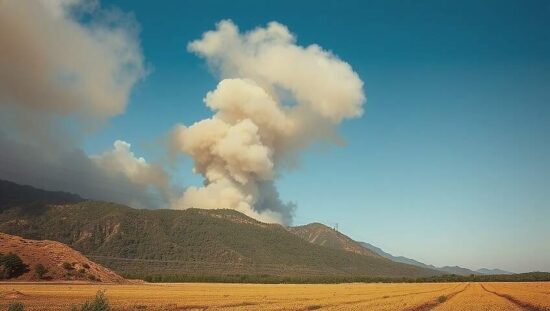
A new study from the Humboldt University of Berlin shows that the devastating forest fires sweeping South America’s dry forests are largely a result of expanding agriculture. Using satellite data, the university’s research team reconstructed the burning history of the Chaco region. While fires occur more frequently during dry spells, the data reveal that they are closely tied to forest clear‑cutting for soybean cultivation and cattle ranching.
The researchers analysed around 175,000 satellite images and found that two‑thirds of the study area has burned at least once since 1985. “Our data clearly demonstrate that drought periods are often used as a convenient window to cheaply clear land with fire” explained Matthias Baumann, the study’s senior author. In their view, fire has become a tool of modern agriculture.
These findings are timely given the European Union’s forthcoming regulation on deforestation‑free supply chains, set to take effect at the end of 2026. The regulation bans the import of raw materials such as soy and beef that have been produced on land deforested after December 2020. According to the university, the study provides the scientific groundwork needed to monitor compliance with these new rules.