




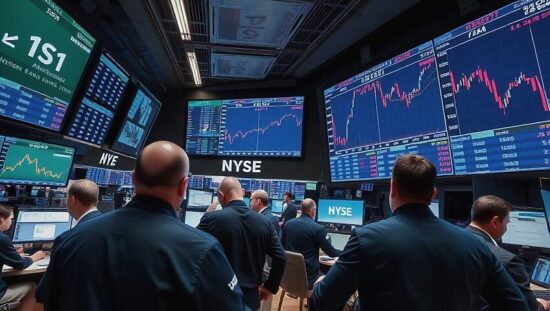
The DAX remained well into the red zone on Thursday, even after an already weak start. By around 12:30 p.m. Germany Standard time, it was trading at 22,905 points – 2.6 percent below the closing level of the previous day. At the top of the most‑traded list were Deutsche Börse, RWE and Hannover Rück; at the bottom were Vonovia, Infineon and Siemens Energy.
“Investor sentiment in the market arena is deteriorating in line with the decreasing willingness of institutional investors to hold high share ratios in their portfolios” said Andreas Lipkow, chief market analyst at CMC Markets. “The mood may fundamentally change as the major sell‑off deadline approaches on Friday”. He noted that in recent trading weeks it had become apparent that the stance toward the Friday crash could shift. “Before the Iran war, many institutional investors were hedged and expected only a multi‑day conflict” he added.
Lipkow went on to explain that “the ramifications are now far more dramatic, and the conflict has moved onto the global economic level”. Iran is deliberately leveraging economic pressure and interfering with U.S. and Israeli plans. “Diplomatic pressure on the warring parties is likely to increase even further from Asia and Europe” he said. “The reliance on Middle‑Eastern energy is severely serious and adds pressure on individual countries”.
The anxieties over inflation and economic growth were particularly heavy on European stocks, largely due to their high dependence on energy imports. “U.S. companies can still distance themselves through energy‑carrier independence and also benefit from rising efficiency brought about by artificial intelligence” Lipkow observed. The U.S. central bank even noted yesterday that the intensified use and integration of AI could potentially trigger deflationary tendencies. Nevertheless, these effects counter the influences on the U.S. real‑estate market and consumption driven by newly released, highly specialised workers.
At 12:00 p.m. German time, the euro had strengthened slightly: one euro cost 1.1472 USD, and one U.S. dollar was worth 0.8717 EUR. Meanwhile, oil prices continued to climb sharply; a barrel of North Sea Brent fetched about 114.40 USD, up 6.5 percent from the previous close.