

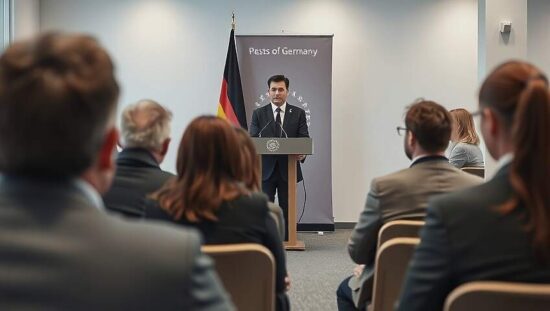
During the recent war in Iran, gasoline and diesel prices at German service stations have surged. In response, Saxony‑Anhalt’s Minister‑President Sven Schulze (CDU) has called for tax relief and urged the state to intervene. The Union parliamentary group – CDU/CSU – deems Schulze’s criticism “well‑justified”. Fraktionsvice‑Chair Sepp Müller (CDU) told Die Welt that if, under a comparable tax burden, diesel is much cheaper in Italy, it forces one to question whether the German fuel market is operating fairly. He argues that the state must act when markets do not function equitably.
In line with that view, the CDU/CSU‑led state government has set up a task force on the issue. Together with the Federal Cartel Office, the task force aims to scrutinise the behavior of the major oil companies more closely, to increase transparency across the entire supply chain and to check possible price gouging. Müller emphasized that stronger oversight in the fuel wholesale market, a clearer regulatory framework, and better coordination with European partners on energy levies would help reduce distortions and protect consumers.
The Alternative for Germany (AfD) has taken a different tack. Its economic spokesman Leif‑Erik Holm said that the word “discount” is deceptive and that the state is “number one con artist at the pump”. Holm called for fundamental tax cuts alongside the abolition of the CO₂ levy, arguing that such measures would be quick, bureaucratically simple and would safeguard the country’s economic stability. He criticised the ban on repeated daily price increases, labeling it “activism” and warned that oil companies would simply add a “safety margin” to prices to cushion themselves from price fluctuations.
Green Party critics focused on what they see as price escalation and gouging in the oil and gas sectors. Greens’ vice‑chair Andreas Audretsch told Die Welt that prices must fall and that the excess profits of oil and gas companies must be siphoned off. He said that a credible threat of an over‑profit tax alone would break the price spiral. Audretsch also called for an immediate cut in the electricity tax, with the resulting extra revenue handed back to the public, and accused federal ministers Jens Spahn and Katherine Reiche of doing nothing to help citizens while pushing Germany deeper into a gas‑and‑oil cost trap.
The Left Party rejected a fuel‑discount scheme on the grounds that it is not targeted, fails to relieve those who need it most, and is climate‑politically wrong. Janine Wissler, faction vice‑chair, told Die Welt that without price controls, oil companies would continue to profit at the expense of taxpayers. She blamed the war for a surge in prices – calling it “a massive mess” – and said that only a firm intervention will restore fairness. Wissler highlighted that the fuel discount primarily helped car owners with large, expensive, high‑consumption vehicles, and called for an excess‑profit tax, climate funds, and the nine‑Euro ticket to alleviate citizens’ costs.