



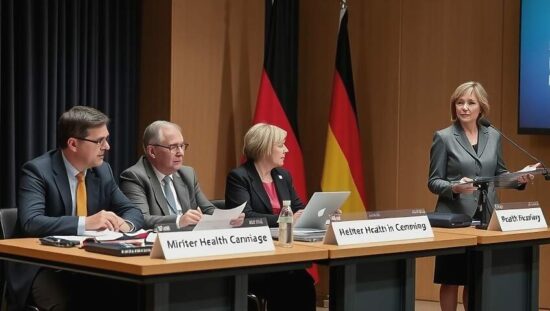
Germany’s sickness funds have urged Health Minister Nina Warken (CDU) to take action on ever‑higher drug prices. “Drug prices in Germany are already the highest after the United States. When it comes to changing them, politics has been too timid” said Oliver Blatt, chairman of the GKV‑Spitzenverband, to the “Neuen Osnabrücker Zeitung”.
When asked whether price pressure could be applied without driving manufacturers away, Blatt answered unreservedly, “Absolutely yes! It’s nonsense to claim that high prices would stimulate more production in Germany”. He noted that German pharmaceutical companies already produce in China or India, and that lobbying arguments are merely pretext.
Minister Warken has set up an expert commission that is expected to submit cost‑saving proposals for health care by the end of March. She has recently said that drug costs need to be “put under control” but a rise in patients’ co‑payments has not been ruled out.
In the past year, the sickness funds spent €58.5 billion on medications, more than on outpatient physician care. Blatt explained that the daily cost per patient for new drugs has risen 180 % since 2012, and that over 40 000 patients receive drugs worth more than €100 000 per year. This, he said, demonstrates that the pharmaceutical industry should participate in the broader health‑system savings, and that this is feasible without dissuading the industry.
Blatt also rejected the claim that price caps worsen recurring supply shortages. “Higher prices do not lead to a better supply situation” he said. “Most shortages are temporary and are compensated for by other drugs, so the supply remains adequate”. He added that there is a real market ceiling: within 52 days of first approval, new drugs become available to all 75 million statutory insured people. “The market is well financed; there is no shortage of money-on the contrary” he remarked.