




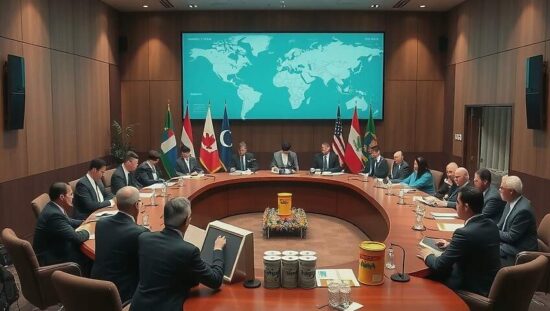
The 32 member countries of the International Energy Agency (IEA) voted unanimously on Wednesday to release 400 million barrels of oil from their emergency reserves. The measure aims to counter the disruptions to oil markets caused by the conflict in the Middle East, the IEA said after a hastily convened extraordinary meeting of its member states.
“Challenges facing the oil market are unprecedented in scale” said IEA Executive Director Fatih Birol. “Oil markets are global, so the response to major shocks must also be global. Energy security is the IEA’s founding mandate, and I’m pleased that the members show strong solidarity and act decisively together”.
Since the opening of the war between Israel and the United States against Iran, oil shipments through the Strait of Hormuz have been severely restricted. According to the IEA, the export volumes of crude and refined products there are now less than 10 % of the levels recorded before 28 February. In 2025, an average of 20 million barrels per day would have been transported through the Strait, accounting for roughly 25 % of worldwide maritime oil transport. Options for detouring around Hormuz are limited.
The IEA’s members reportedly hold emergency reserves of more than 1.2 billion barrels, plus an additional 600 million barrels of industry stocks that are kept under state mandates. This coordinated release is the sixth time the IEA has deployed reserves in its history, following actions in 1991, 2005, 2011, and twice in 2022.