




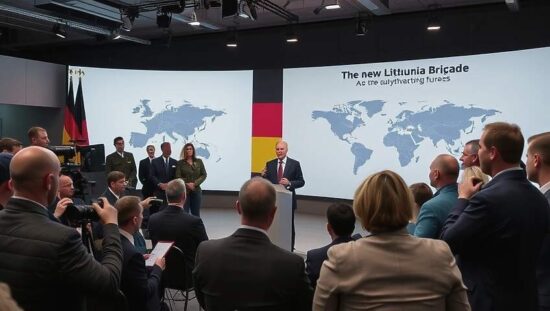
The German Bundestag’s Wehrbeauftragter, Henning Otte, a member of the CDU, urged the Defence Ministry to assess the situation with the newly established Lithuanian brigade of the Bundeswehr. Otte said the ministry should once again marshal all its resources to promote recruitment and appeal to volunteers, a stated goal of the ministry. He added that ultimately the ministry must also guarantee that the brigade becomes operational as promised, and hinted at the possibility of a compulsory solution if voluntary enlistment remains insufficient.
Otte explained that one reason few volunteers have applied is the decision not to mandate deployment but instead to emphasize that this posting is intended as a long‑term, possibly permanent, stationing. This created high expectations. Lithuanian forces are working to provide the necessary infrastructure and support.
The brigade is expected to expand to more than 5,000 soldiers by 2027, Otte noted. He highlighted a new challenge: the battlegroup has now been merged into the brigade. Because of this integration, the foreign service surcharge has been eliminated, leaving only a service surcharge that, in many cases, does not fully compensate soldiers, who still must provide their own basic supplies. Otte said another interim assessment is needed to determine whether the brigade’s attractiveness is strong enough to recruit volunteers.
On Tuesday, Otte presented the first annual report he had prepared. Personnel growth remains a central focus. According to the report, this is the key obstacle for the Bundeswehr to strengthen its military capabilities. Demographic trends, competition for skilled workers in the job market, persistently high dropout rates, and structural deficits are limiting factors. Without a consistent and sustainable personnel strategy, a gap between political ambition and military reality threatens to widen. The report calls attention to lengthy personnel procedures, slow security clearance processes, and inadequate communication with affected personnel.
In addition, Otte demands better equipment for the Bundeswehr. With the Bundestag’s opening of the debt brake for defence spending, the necessary financial levers for a “combat‑ready and war‑capable Bundeswehr” have been set in place. To achieve lasting impact, the money must now be spent efficiently. The blanket reference to “under‑funding of the Bundeswehr” has become no longer a sufficient excuse since the last reporting year, the Wehrbeauftragter pointed out.