




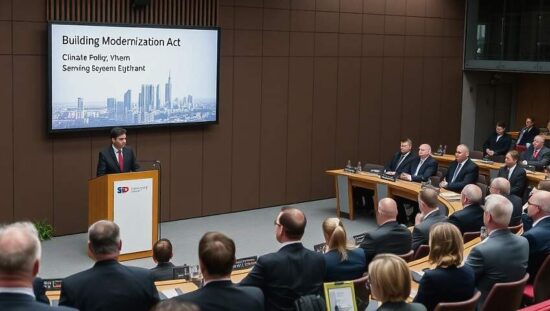
The SPD climate‑policy spokesman Jakob Blankenburg has taken a distance from the planned Building Modernisation Act and has warned that the draft still represents only key points, not the final law. “These are points of reference, not a finished law” he told the Funke‑Media Group newspapers on Wednesday. In many areas the work has only just begun, and it is the full legal text that will ultimately decide how socially and effectively the legislation will perform.
Blankenburg, whose party had previously supported the Building Energy Act, expressed disagreement with the coalition’s reform proposal, saying that the SPD would have preferred a different approach. Nonetheless, he noted that most voters in the federal election favored a move away from the existing law. “We are compelled to work with what exists and we accept the challenge of turning these political cornerstones into a concrete law” he added.
The direction, according to Blankenburg, is unmistakable: move away from oil and gas toward renewable heat. In line with this, subsidies for renewable heating technologies will continue. “The decision is clear: fossil heating will inevitably become a cost trap. District heating or a heat pump is the most sensible choice” he stated.
He pointed out two areas where amendments are necessary. First, subsidies must be more equitable and reach those who truly need them. “If someone’s heating system fails, they should not be forced to rely on a gas heater because of financial hardship” he explained. Second, he highlighted tenant protection. Of the 58 % of Germans who rent, many have no say over heating in the basement but still bear the costs. “If landlords make the decisions, they must also shoulder the responsibility” Blankenburg told the Funke newspapers, though he did not elaborate on the specific tenant‑protection measures that would be included in the new law.