


Claudia Roth, the former German federal cultural minister, sharply criticized the approach of her successor, independent political official Wolfgang Weimer, who has called a special meeting of the supervisory board of the “Kulturveranstaltungen des Bundes in Berlin GmbH” (KBB). Roth told the “Tagesspiegel” that politics must never influence the artistic content of cultural works, nor decide what hangs in museums or which films are shown. She insisted that the autonomy of cultural institutions must remain protected.
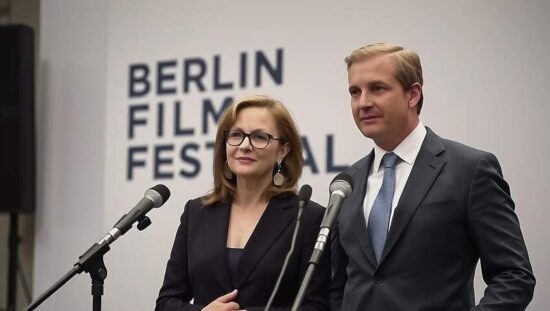
Weimer’s meeting was meant to discuss the direction of the Berlinale. The federal agency for culture and media (BKM) confirmed the agenda and said that the discussions will continue in the coming days. Earlier reports had suggested that the festival’s current artistic director, Tricia Tuttle, could be replaced. That concern stems in part from the appearance of Syrian‑Palestinian director Abdallah Alkhatib at the festival’s award ceremony on Saturday.
Roth, who served as cultural minister from 2021 to 2025, warned that in a time of rising authoritarianism and growing attacks on democracy, artistic freedom is under threat. She cited Article 5 of the Basic Law – freedom of expression, as well as freedom of art, culture, and science – as a cornerstone of democracy. Roth clarified that this does not mean agreeing with every artistic stance. Rather, she stressed that the state must defend artistic freedom, even when it disagrees with a particular work. She believed this defence is especially vital given the current political climate.
“Democracy is under attack, and we have a party – the AfD – that seeks to smooth it out” Roth said. In the regions where the AfD holds the majority, she said, it directly targets cultural institutions, derails festivals, and undermines the creative community. She warned that the impression that politics is shaping the content of Germany’s biggest film festival must be avoided. “What we need are autonomy, independence, and space – within the bounds of the law” she added.
Roth compared giving up these principles to a loss against countries where politics already controls art. She cited the United States, where former President Trump dictated what would appear in museums, how the Kennedy Center operates, and which books are published. She said that, while she does not presume the influence is universal, protecting Article 5 is essential and must not be attacked.
Katrin Göring‑Eckardt, spokesperson for culture and media in the Green parliamentary group, also slammed Weimer. She accused the federal government of lacking a clear plan to confront antisemitism. Despite postponing personnel matters, she argued that the damage to the entire cultural sector has already been inflicted, as Weimer threatens to destabilize the industry again. Art and culture must remain free of state interference.
Göring‑Eckardt criticized Weimer’s approach toward the film festival and its organizers, noting that the debate over Tuttle’s possible removal by the culture and media commissioner symbolises Weimer’s political stance on antisemitism. She said Weimer “pushes a line in the sand” and evades responsibility.
The Social Democratic Party (SPD) labeled Weimer’s conduct as excessive. Martin Rabanus, the culture‑politics spokesperson for the SPD parliamentary group, told the “Tagesspiegel” that if the world invites artists and their personal views, the party must learn to accept them. Otherwise, the party would close rooms instead of opening them.
For the Left party, the handling of the Berlinale is a “severe mistake”. Ines Schwerdtner, co‑chair of the party’s federal executive, said a culture minister who usually opposes cancel culture is now intervening in an international film festival. This, she warned, poses a dangerous precedent for artistic freedom and risks severe damage to the Berlinale’s reputation. “If Tuttle has to be removed for supporting Palestinian solidarity, that would signal the end of the Berlinale”.