




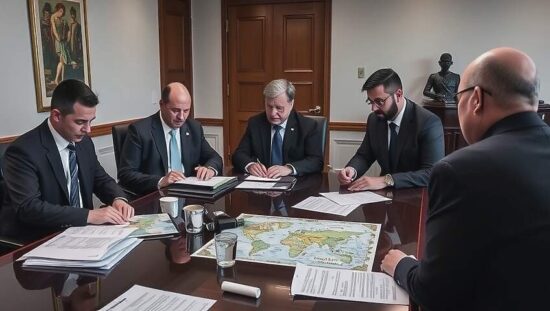
The federal government aims to simplify and strengthen the seizure and safeguarding of assets that are either criminally or suspiciously sourced. This policy, which derives from a new strategy to “reorient the fight against organized crime as well as financial and drug crime” is set to be approved by the Cabinet and will be presented this Wednesday by Finance Minister Lars Klingbeil (SPD), Justice Minister Stefanie Hubig (SPD) and Interior Minister Alexander Dobrindt (CSU).
According to the draft, the government will streamline and reinforce the rules governing the confiscation of criminal assets and introduce new provisions for administrative investigations and the holding of assets of uncertain provenance. The paper notes that seizure procedures and access to such assets will be facilitated already at the administrative level. In particular, for cases marked by pronounced wealth‑income disparities or links to organized crime, a reversal of the burden of proof will be applied when seizing assets of unclear origin.
Government sources say the measures will enable the immediate securing of properties such as real estate, luxury cars, and cash once investigations are launched, especially when the legal origin of the assets cannot be established. To support this effort, the strategy calls for “purpose‑bound and legally secure direct data access” between customs authorities and the Federal Criminal Police Office (BKA). National legal changes will be pursued to allow both agencies to obtain the necessary data in accordance with constitutional safeguards.
In addition, the federal government plans a joint competence centre for customs and the BKA, as well as a dedicated “Money‑Laundering Investigation Centre” within customs, to further consolidate resources and streamline investigations.