




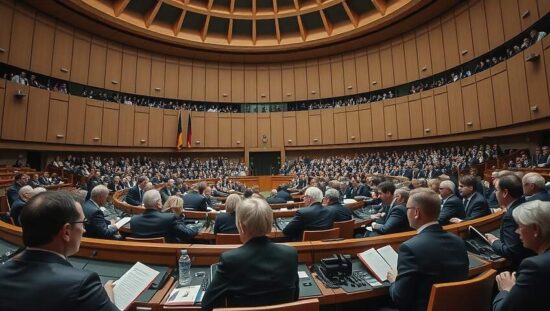
In the Bundestag resistance is mounting against the planned multi‑billion‑euro purchase of combat drones. The opposition stems from the fact that controversial U.S. billionaire Peter Thiel is an investor in one of the two companies slated to supply the German armed forces, the Süddeutsche Zeitung reports. On 25 February the Bundestag’s budget committee is slated to approve the procurement from the two firms, a total value of up to €4.32 billion. The decision is based on several “confidential” submissions from the finance ministry, which the newspaper cites.
Because Thiel is a shareholder in the Berlin‑based firm, the Green Party is demanding that the deal be abandoned over potential risks. Green MP Sebastian Schäfer told the SZ that “our doubts about the upcoming drone procurement are growing. We need to know who we are doing such delicate business with”. At this time the federal government cannot clarify who owns which shares in the companies.
Green defence spokesman Sara Nanni added that Chancellor Friedrich Merz had spoken at a Munich security conference about the need to become more independent from the United States. “Yet the Bundestag is set to approve a purchase in which the influence of MAGA‑aligned investor Peter Thiel is unclear” Nanni said. She also raised the point of absurdly high unit prices and urged the parliament not to give its approval.
SPD budget and defence expert Andreas Schwarz called for a thorough investigation of the transactions. “This crucial procurement initiative features high and varied contract sizes for the two suppliers, and from an accounting perspective there remain many unanswered questions and a need for clarification” Schwarz told the SZ.
The attack drones are intended to equip a new German brigade-approximately 5,000 soldiers-in Lithuania on NATO’s eastern flank, as a deterrent against Russia. Letters to the Bundestag note that the quality of the systems has not yet been definitively assessed: “The final negotiated contract takes into account the risk that qualification has not been fully completed at the time of signing, with clear termination criteria prior to final serial production”. The seven‑year contract period will also allow for technological development of the performance and delivery aspects.