




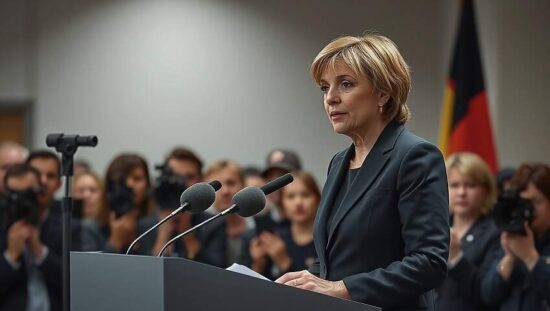
Bundesfamilienministerin Karin Prien (CDU) is pressing for a rapid reform of the electoral law, saying it is “essential for the coalition” in an interview with “Stern”.
She warned that, before the next election, the policy that certain electoral districts are under‑represented must be reversed. “That is a matter of credibility and the traceability of elections” she said. “Whether we can secure a constitutionally compliant proposal for parity is secondary”.
Earlier, the SPD had demanded that parity rules be made a prerequisite for any electoral‑law reform. Prien rejected that linkage: “It is important to me that the work of the electoral‑reform commission should not be tied to the parity issue in a purely opportunistic way”. She insists that the commission must be able to address the problem of direct‑election districts while also discussing parity.
Nevertheless, the minister reaffirmed her fundamental wish for constitutionally sound parity regulations. “The existing rules are evidently not sufficient” she explained. “So my focus is on how to improve the constitutional representation of women”. She noted that, given past judicial rulings, this remains a difficult task.
Prien has faced strong criticism, including from within her own party, over her push for parity reforms. “I have been committed to this goal for years and, as women’s minister, I will not stop” she defended herself. “Other European countries discuss parity debates far more calmly” she added, noting that the hard stance she sees now is part of a societal shift where gender‑equality issues appear to lack relevance. She was determined to challenge that view.
As the deputy chair of the CDU, Prien remarked to her party that progress on parity must also be achieved within the CDU. Many state associations have already begun to move in that direction and are developing solutions. “I see myself as a federal minister in the same tradition as Rita Süssmuth-this is part of her legacy” she said.