




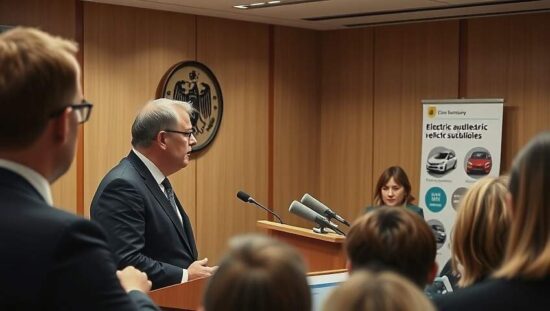
The president of the Federal Court of Auditors, Kay Scheller, has criticized the federal government for a lack of planning in its support for electric mobility. “Many citizens find it hard to see a clear strategy – I am one of them” Scheller said to “Welt am Sonntag”. “The policy swings from supporting electric cars, to stopping it, then back again – how can the consumer understand this? It looks unfocused and shows no long‑term plan”.
He said other subsidies should also be scrutinized. “The criticism of tasks is the order of the day. All spending programmes that offer voluntary benefits need to be examined for their necessity” the court’s president said. “There are still climate‑damaging subsidies and tax incentives. For example, the diesel subsidy for public transport buses is higher for higher consumption. Or the tax bonus for home improvement work – we are giving up billions in revenue without effectively tackling hidden labour. That needs to be addressed”.
Scheller urged politicians to be bolder in cutting costs and setting priorities. “Those who must adapt to a changed reality need to prioritise and decide what truly comes first – and what does not” he told “Welt am Sonntag”. “That requires will and courage, which I don’t see here in the amount the country needs”.
He also called for a review of the welfare state’s benefits. “It should focus on those who are truly vulnerable” Scheller said. “The welfare system is currently subsidizing well into the middle class, and this must be scrutinised. What do we still afford if we need room for new responsibilities?”
Scheller said Germany must invest in national defence. “We can no longer rely on the protection from the United States” he warned. The same urgency applies to infrastructure that is worn out – railways, motorways and damaged bridges need immediate renewal. He criticized the approved extension of the “Mutterpension” (spousal retirement allowance) and the prolongation of the retirement line: “The pension transfer system no longer works without massive subsidies from the federal budget – about 120 billion euros at present. New benefits increase the financing pressure. The Federal Court of Auditors recommends not to widen the subsidy from the federal budget further. The money is missing for other expenditures”.
Recognition of the seriousness of the situation must be matched by appropriate action. “A functioning state needs sustainable budgeting and stable, sound finances” Scheller said. “It must adapt to the new reality. That has been under‑developed, and the reality will not adjust to us and our limited capacities”. He reaffirmed that all voluntary state benefits should “be examined for necessity”. He also sees savings potential in public service.
“Government should also be tested” Scheller added. “The top federal agencies leave much room for improvement. We have large matrix structures for many small, manageable topics, which add complexity. That is one reason why it often takes too long for an idea to become a decision”.
Scheller criticized the use of millions from the special infrastructure fund. “Clearly, the money does not go into investments as much as it should in these debt‑financed programmes” he said. “This creates room in the core budget for consumption spending, which cannot be, it contradicts the added nature of these funds”. He warned that “we have huge challenges but an entirely inadequate budgetary preparation. Now a lot of money meets structures that are often not capable of using it effectively”. He identified structural deficiencies – inefficient structures, inadequate digitisation, and very complex procedures involving many stakeholders that often get in each other’s way. This costs time, money and effectiveness. Processes across the entire public administration need urgent improvement.