




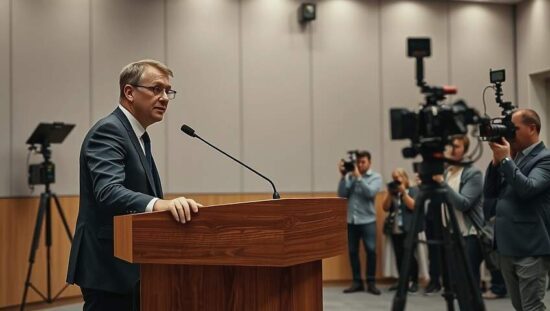
Klaus Müller, president of Germany’s Federal Network Agency (Bundesnetzagentur), has made it clear that he will not describe the current situation as a gas shortage, even though storage levels are historically low. In an interview on POLITICO’s “Berlin Playbook” podcast, he said, “There is no gas shortage because supply in Germany and Europe remains stable”.
Müller acknowledged that the gas storage facilities are at low levels, but emphasised that traders and local utilities still have ample alternatives for bringing gas into the country. Potential suppliers include Norway, the Netherlands and Belgium. He also pointed to underutilised liquefied‑gas terminals on the North and Baltic seas as additional sources.
The agency foresees Germany exiting the winter with very low storage inventory. Import requirements point to rising prices in February and March. “This won’t matter as much for households because they typically have contracts for 12 to 24 months” Müller noted. Looking ahead, the agency expects futures prices on the gas market to fall in the autumn and winter of 2026 and into early 2027.
Still, Müller warned that the 2026/27 winter will be the next major challenge, placing the on‑us of private traders to secure sufficient new gas. He outlined two key issues to watch: whether market signals indicate enough gas will be injected into storage, and whether the system is well‑prepared for exogenous shocks.
A strategic gas reserve is currently under discussion. When asked for examples of such shocks, Müller cited “anything that has to do with terrorism” as the greatest risk to gas supply, even at present.