




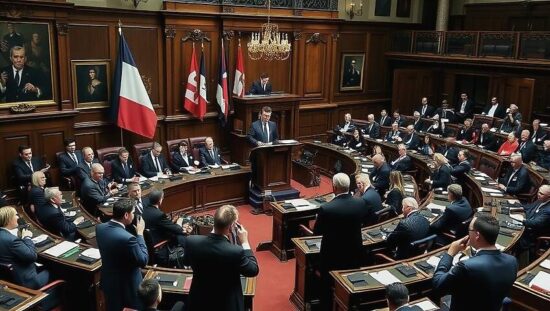
The French government survived two no‑confidence votes in the National Assembly before finally passing the budget for the current year. In the first motion, 260 deputies from the left‑wing bloc-excluding the Socialists-supported the proposal, while the right‑wing Rassemblement National received 135 votes. A majority would have required 289 votes in each case.
The adopted budget aims to bring the state deficit down from 5.4 % of GDP to below 5 %. Whether this target will be achieved is uncertain, as the cost‑cutting measures originally planned by Prime Minister Sébastien Lecornu turned out to be less drastic than announced. Additionally, defence spending is increased by €6.7 billion to a total of €57.1 billion.
Even with the intended deficit reduction, France remains above the EU’s 3 % threshold. State debt is projected to rise from roughly 116 % of GDP in 2025 to about 118 % this year. Lecornu’s centre‑right administration does not hold an outright majority in the Assembly and has had to secure shifting support. To enforce the budget, Lecornu invoked Article 49.3 of the constitution, which allows a law to be passed if subsequent no‑confidence motions are survived-a measure he had previously ruled out when taking office.