




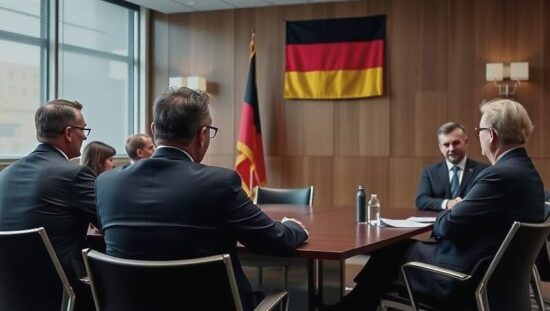
The German Federal Ministry of Education, led by Minister Karin Prien (CDU), has tightened the conditions for municipal democracy programmes. According to an internal ministry letter quoted by “Stern”, district governors and mayors of independent cities can no longer unilaterally withdraw funding from the “Partnerschaften für Demokratie” scheme.
Beginning in 2026, the letter says that municipalities must demonstrate the involvement of either the municipal body or the decision‑making committee to the federal government. In practice this means that the district council (Kreistag) or the relevant committee must approve the grant requests.
State governments have criticised the new rules. Schwerin’s Minister-President Manuela Schwesig (SPD) told the magazine that, in an era when democracy is threatened, citizens’ efforts to support it should be encouraged, not hindered. “There should be no additional hurdles” she said. She added that it should be possible to fund democracy projects directly, regardless of majority composition in municipal parliaments.
In eastern Germany, the AfD frequently holds the largest share of seats in local councils, even though it never has an outright majority. The party often forms coalitions with the CDU and other groups to decide on local matters.
The ministry’s spokesperson reiterated the need for local decision‑makers to commit to the programmes. “For the acceptance, success, and broad reach of on‑the‑ground initiatives, it is essential that municipal authorities themselves endorse them” he said. According to the federal government’s latest budget, €44.7 million is earmarked for 332 partnership projects in 2025, with individual projects eligible for up to €160,000 in funding.