




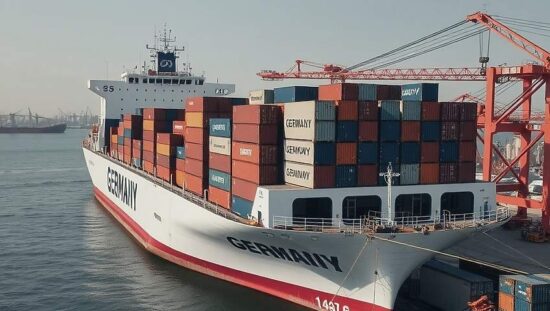
German exports to India have surged by almost 40 % since 2019, while shipments to China have slipped by roughly 15 %. A free‑trade agreement between the EU and India could therefore magnify this trend, according to an analysis published on Monday by the German Economic Institute (IW).
For Germany’s export‑oriented economies, India is emerging as a crucial partner. The IW notes that Commissioner Ursula von der Leyen’s upcoming visit to India carries high expectations. Although German exports to India still represent only about 1 % of total German exports, that share is steadily growing-unlike China, whose importance for German trade has been declining for years.
India also offers an opportunity to reduce dependence on China. In electronics, the country is expanding its capacity and could become an alternative supplier for German machinery and electronics makers. The IT services sector in India is strong as well, an area where Europe has traditionally relied heavily on the United States.
Yet concerns remain on both sides. The EU wants to limit steel imports and enforce higher export quotas for European cars, while India views the EU’s proposed Carbon Border Adjustment Mechanism with scepticism. The agricultural sector is likely to stay largely excluded from the agreement. Consequently, the treaty may not be as inclusive as some recent EU trade deals.
The IW concludes that both parties must make concessions, but overall the benefits will outweigh the costs. Current global conditions appear conducive to this outcome. In a geopolitically fragmenting world, finalising the agreement is a critical step for the EU to broaden its network of reliable partners. India must be part of this strategy as its global influence grows.
The institute also cautions that the Mercosur deal serves as a reminder: “Nothing is achieved if negotiations are dragged on to perfection” it says.