




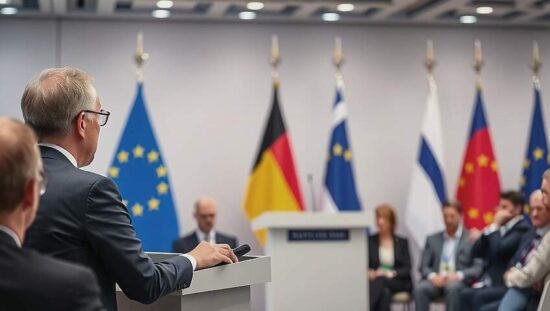
German Foreign Minister Johannes W. Wadephul has turned his attention to the Baltic Sea region. “Here we and some of our closest partners in the European Union and NATO face hybrid threats from Russia” he said on Monday, just before leaving for Latvia and Sweden.
He added that the situation in this area will determine whether unity and strength can sustain lasting freedom, security and prosperity across Europe.
In Riga, Wadephul plans to discuss Latvia’s experience with its ambassadors. Latvia, he noted, “acts as a representative of a country that feels Russia’s security‑policy posturing against Europe more immediately than others”. No other EU region, he said, is so deeply affected by the Kremlin’s orchestrated hybrid activities.
“The Baltic experience underscores our urgent need for action. We cannot afford to lose time when it comes to protecting critical infrastructure or implementing sanctions against Russia’s shadow fleet” the foreign minister said. Security and resilience in the Baltic Sea area, he argued, contribute to stability throughout Europe.
Wadephul also highlighted Sweden’s role, particularly since its NATO accession. As a leading voice among Nordic states-a group with which Germany has close ties-Sweden brings substantial security‑policy experience and expertise to the alliance. “Sweden is determinedly investing in national security and defence capability and has set new standards with its modern conscription system” he said.