




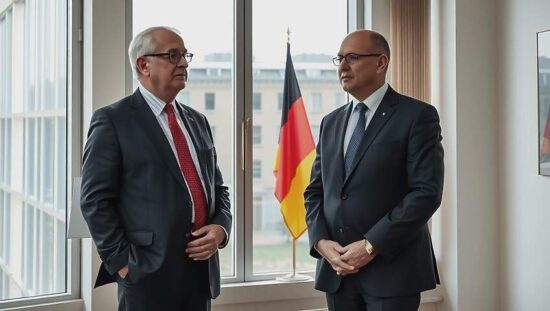
The CEOs of two leading German asset managers – Union Investment and Lupus Alpha – have openly criticised the federal government’s pension policy.
Ralf Lochmüller, Managing Director of Lupus Alpha, told the business magazine “Capital” that the “early‑starter pension” (Frühstartrente) does not deliver enough benefit. “Ten euros a month after six years is too little to create real impact” he said. He added that the scheme would be useful only if it were linked to the private pension pot and that contribution limits should be removed so that people could pay in as much as they wish between the ages of six and sixty‑six.
Hans Joachim Reinke, Chairman of Union Investment, echoed the call for a stronger focus on private retirement savings. “We must think about the private pension fund from age six to sixty‑six” Reinke explained.
Recent German household investment statistics reveal that younger people are now more active in the capital markets. “They no longer trust the statutory pension and recognise that they need to save on their own” Reinke observed. “However, many turn straight to alternative assets or cryptocurrencies, taking on high risks. The lack of financial education leads to mistakes that could become costly later on”.
Lochmüller argues that previous federal administrations have failed to reform the pension system. “In my view, the first pillar – the pay‑as‑you‑go statutory pension – is unchangeable, to the detriment of the younger generation” he said. He dismisses the idea of a sovereign wealth fund whose dividends would fund current pensions as unrealistic and “too late”; according to him, such a fund should have been launched three decades ago, as other countries have done.
While Reinke calls for a stronger private pension framework, Lochmüller is an advocate of improved company‑based pensions. “They enjoy high acceptance among the public” he noted. “We need to expand their reach as widely as possible – ideally to 90 percent of workers”.