




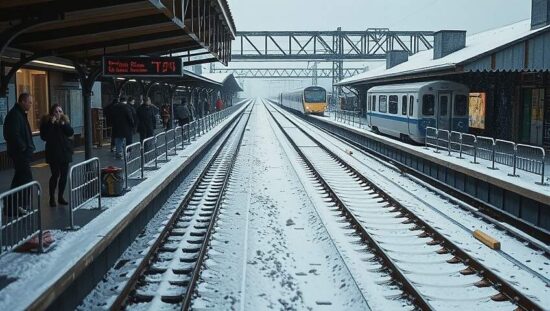
Deutsche Bahn Faces Scrutiny Amidst Winter Storm Fallout
The fallout from Winter Storm “Elli” continues to spark criticism and calls for accountability within Germany’s national railway operator, Deutsche Bahn (DB). In a statement released to Bild newspaper, DB CEO Evelyn Palla issued a formal apology to passengers while simultaneously defending the widespread and prolonged disruption to rail services.
The storm impacted approximately 3,000 kilometers of track primarily in northern Germany, a network equivalent to that of the Swiss Federal Railways, requiring extensive snow removal operations. Palla lauded the efforts of DB’s clearing teams, describing their work as “a strong performance” in the face of challenging conditions.
However, the apology rings somewhat hollow given the scale of the disruption and the frustration voiced by stranded commuters. The preemptive shutdown of large sections of the rail network has drawn significant scrutiny. While Palla asserted that the decision was driven by prioritizing passenger and employee safety – specifically to avoid trains becoming stranded without power or heating – critics are questioning whether the measure was excessively cautious and disproportionate to the actual risk.
The preemptive closures effectively paralyzed a vital transportation artery for the region, leaving many individuals unable to reach work, appointments, or connect with family. This response raises broader questions about DB’s infrastructure resilience and its contingency planning for extreme weather events, particularly in a context of increasingly unpredictable climate patterns.
Furthermore, the incident underscores a long-standing tension between DB’s commitment to passenger safety and the operational reliability required for a modern, efficient transport system. While prioritizing safety is paramount, the significant economic and social costs of the shutdown-including missed appointments, disrupted supply chains and the resulting public anger-demand a more nuanced approach. The incident inevitably reignites the debate surrounding investment in rail infrastructure improvements and the modernization of DB’s operational protocols, potentially triggering further parliamentary inquiries and calls for a comprehensive review of the company’s winter preparedness strategy.