




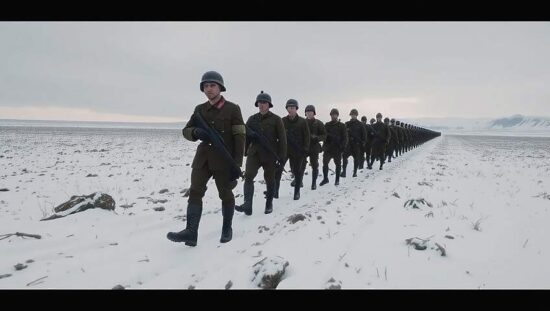
German Reservist Leader Proposes Troop Deployment to Greenland
A controversial proposal to station German troops on Greenland is gaining traction within certain circles in Berlin, fueled by anxieties surrounding potential shifts in US foreign policy and the shadow of a former presidential administration.. Patrick Sensburg, president of the German Reservists’ Association of the Bundeswehr, has publicly advocated for the deployment as a preventative measure against possible American acquisition of the territory.
Sensburg’s suggestion, articulated in an interview with Bild newspaper, stems from concerns about the seriousness with which former US President Donald Trump previously pursued discussions regarding Greenland’s potential purchase. He argues that Europe and Germany in particular, has a strategic obligation to bolster its presence on the Arctic island.
“We must assume that US President Trump was serious about Greenland” Sensburg stated. “Europe must therefore exhibit a considerably stronger presence there. We need to rapidly deploy two European brigades, under Danish leadership, to the region. Germany, in particular, has a special responsibility in this regard.
The proposed deployment isn’t solely framed as a reactive measure. Sensburg suggests the opportunity presented could also serve to enhance the Bundeswehr’s operational capabilities. He envisions a scenario where German soldiers, alongside their European counterparts, would benefit from training and exercises in the challenging Arctic environment, complementing existing specialized training facilities like the mountain warfare school in Mittenwald. This, he believes, would foster closer collaboration and greater cohesion within the European defense framework.
However, the plan immediately raises complex geopolitical questions. The proposal implicitly acknowledges a deterioration of trust and a potential breakdown in transatlantic relations, raising concerns about the increasingly transactional nature of US foreign policy. Furthermore, the proposal’s reliance on Danish leadership highlights the delicate balance between EU aspirations for strategic autonomy and the continued dependence on NATO partnership. Critics may argue that the plan represents an overreaction, potentially escalating tensions with the United States and further fragmenting an already strained geopolitical landscape. The feasibility and logistical implications of deploying and sustaining two European brigades in Greenland also warrant careful scrutiny, particularly given the logistical difficulties inherent in operating in such a remote and harsh environment.
The suggestion is expected to spark debate within the German government and the wider European Union, forcing a reckoning with the evolving realities of international power dynamics and the future of European security.