



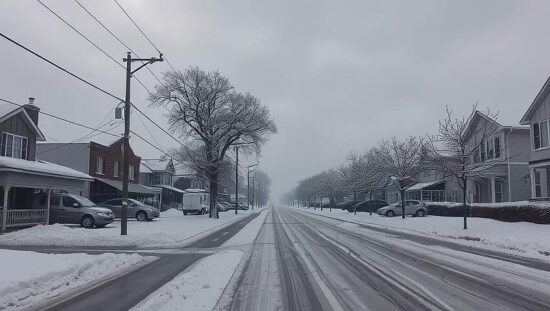
The Saarland state government has abruptly cancelled in-person classes across all schools for Monday, following a similar decision in North Rhine-Westphalia. The move, announced late Sunday by Education Minister Christine Streichert-Clivot, is a direct response to severe weather warnings issued by the German Weather Service (DWD), forecasting widespread ice and hazardous conditions resulting from freezing rain overnight.
Minister Streichert-Clivot justified the decision emphasizing student and staff safety, stating that the risk posed by potentially treacherous commutes was untenable. Instead of regular classroom instruction, students will be required to participate in remote learning.
Acknowledging the challenges faced by working parents, the government has mandated that each school establish emergency childcare provisions for children unable to be supervised at home. This initiative draws upon the Digital Education Act (DiBiG), implemented since August 2025, which was intended to provide a framework for addressing extraordinary situations within education.
However, the rapid succession of school closures across German states raises critical questions about the preparedness of regional infrastructure and the efficacy of existing safety protocols. Critics argue that reliance on increasingly severe weather warnings as a trigger for disruption highlights a systemic failure to invest in winter-resilient roads and public transportation. Furthermore, the DiBiG’s implementation is drawing scrutiny. While touted as a solution for emergencies, its reliance on technology exposes vulnerabilities regarding equitable access for students from lower socioeconomic backgrounds, who may lack reliable internet access or suitable devices for remote learning.
The abrupt nature of the cancellations and the reliance on last-minute emergency childcare arrangements, also expose potential inadequacies in contingency planning and the potential for disproportionate impact on essential workers. The situation is likely to reignite the debate regarding the long-term resilience of Germany’s education system in the face of increasingly frequent extreme weather events.