



“German Energy Regulator Confirms Secure Gas Supply Amidst Winter Challenges, Highlights Previous Investments”
Despite current winter storm conditions and plummeting temperatures, Germany’s gas supply remains secure, according to Klaus Müller, President of the Federal Network Agency (BNetzA). In remarks conveyed to the Redaktionsnetzwerk Deutschland, Müller asserted that the country is not experiencing significant concerns related to the prevailing weather patterns, even anticipating potential cold snaps in February or March.
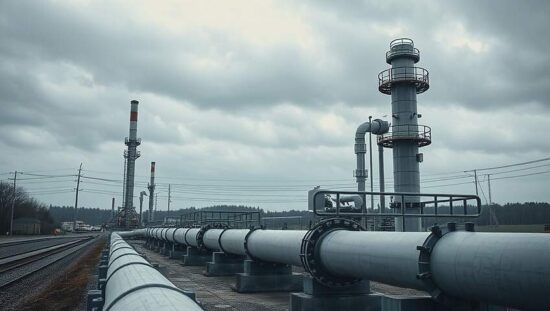
Müller emphasized that German energy suppliers are adequately positioned to meet demand, drawing upon stored reserves and accessing international markets through a network of increasingly vital Liquefied Natural Gas (LNG) terminals. He credited years of strategic effort for the current stability, noting that the diversification of import routes and the realignment of gas flows have effectively bolstered Germany’s energy security.
However, the declaration, while reassuring, carries a nuanced backdrop. While LNG terminals have undeniably provided a crucial alternative to reliance on Russian gas, their capacity and operational efficiency remain subject to ongoing scrutiny. Critics have pointed to the costs associated with these facilities, questioning their long-term economic viability and highlighting the continued dependence, albeit shifted, on global energy markets. The extent to which Germany can sustain these import strategies in the face of potential geopolitical shifts remains a crucial, unresolved factor.
Furthermore, Müller’s confirmation implicitly acknowledges the political decisions that underpinned the swift and often complex restructuring of Germany’s energy infrastructure. These choices, hurried in response to the Russian invasion of Ukraine, involved significant financial investments and required a degree of public acceptance that is increasingly being examined as energy prices fluctuate and the long-term implications of these new dependencies become more apparent. The declared “guarantee” of supply, therefore, represents not an end point, but a precarious balance maintained through considerable and ongoing effort.