




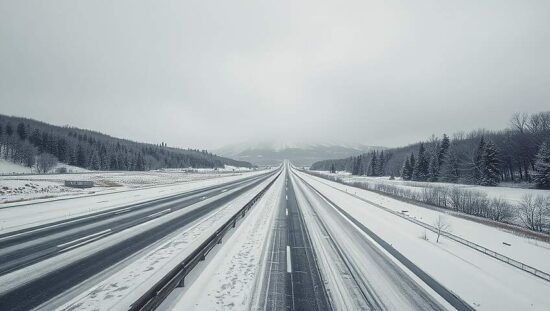
German Autobahn Authority Claims Readiness Amidst Winter Concerns, Sparks Debate on Infrastructure Resilience
Amidst growing anxieties surrounding increasingly erratic weather patterns, the Autobahn GmbH, responsible for the maintenance of Germany’s expansive highway network, asserts it is adequately prepared for the upcoming winter season. According to internal communications reported in the Rheinische Post, the authority states that salt storage facilities and silos along autobahn routes are currently approximately 80% full, signaling a proactive approach to winter road maintenance. The national supply of de-icing salt is also reportedly secured and existing storage capacity within Autobahnmeistereien (highway maintenance depots) is designed to handle a typical winter scenario.
However, while officials emphasize the commitment to ensuring “reliable and safe” highway conditions even under challenging conditions, the caveat regarding a “guarantee for completely snow-free roads” has drawn scrutiny. The statement places a degree of responsibility on drivers to adjust their driving behaviors based on prevailing weather, prompting debate about the extent to which infrastructure resilience should absolve individual motorists of caution.
Critics argue that solely shifting responsibility to drivers ignores the fundamental issue of infrastructure vulnerability in the face of a rapidly changing climate. Rising temperatures and increasingly intense precipitation events are placing unprecedented strain on existing systems, extending beyond the simply “normal” winter conditions for which current storage and logistical strategies are optimized. The acknowledged reliance on subsequent orders of de-icing salt in the event of “exceptional weather” raises concerns about potential supply chain disruptions and delays, particularly given recent global disruptions impacting material availability.
The Autobahn GmbH’s contingency plan, while seemingly standard practice, fails to explicitly address long-term adaptation strategies to mitigate the escalating effects of climate change on infrastructure upkeep and transportation safety. The reliance on reactive measures – ordering more salt “after” an extreme event – hints at a potentially insufficient long-term vision for maintaining a vital national artery in a future defined by increasing climatic volatility. The current approach, while aiming for immediate preparedness, risks overlooking the need for a more holistic and forward-thinking assessment of German highway infrastructure’s resilience.