




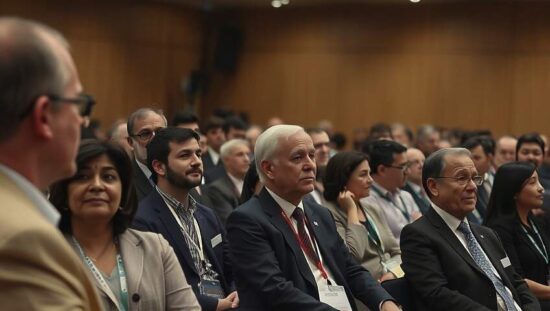
The decision to extend invitations to representatives of the Alternative für Deutschland (AfD) to participate in the 2026 Munich Security Conference has ignited a debate, defended by the conference’s chairman, Wolfgang Ischinger, as a necessary measure to avoid the party’s potential exploitation of exclusion. Speaking to T-Online, Ischinger argued that a refusal would likely be leveraged by the AfD to portray themselves as victims of censorship, a tactic he believes undermines the conference’s credibility.
Ischinger emphasized the Munich Security Conference’s role as a preeminent global forum for international dialogue, underscoring its commitment to representing a spectrum of often opposing viewpoints. He drew parallels to past engagements between historically adversarial entities – citing examples such as Serbia and Kosovo, Azerbaijan and Armenia and even Israel and Saudi Arabia – to illustrate the conference’s core function of facilitating dialogue and seeking solutions amongst conflict parties. “Bringing adversaries, even enemies, together in Munich is in the DNA of the Security Conference” he stated.
However, Ischinger’s justification for the invitations did not extend to an endorsement of the AfD’s political positions. He sharply criticized the party’s security policy stances, describing them as “completely wrong” and detrimental to German interests. He clarified that the invitations, stemming from the conference’s private organizational structure, should not be construed as a platform for direct political confrontation with the AfD. “The invitation policy of a private organization is not the appropriate means for this kind of engagement” he asserted.
Furthermore, Ischinger signaled that appearances by AfD politicians on the conference’s main stage are not anticipated. He shifted the responsibility for curbing the AfD’s political influence back to mainstream parties, suggesting that a substantive and political challenge from established parties is the key to ultimately diminishing its presence in the Bundestag. This perspective highlights a broader debate within German politics concerning how best to address the rise of the far-right party, with Ischinger seemingly advocating for a strategic approach centered on ideological rebuttal rather than outright exclusion from diplomatic platforms.