




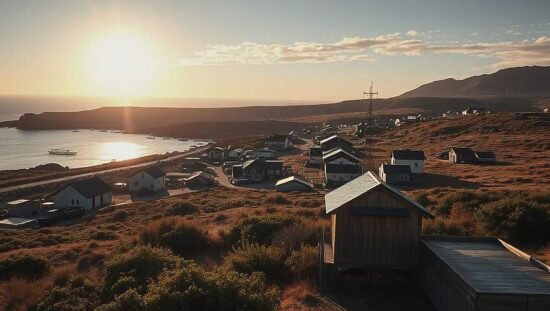
The Chatham Islands, a remote New Zealand territory, were effectively the first inhabited place to greet 2026, sparking a wave of New Year celebrations across the Pacific region. This geographically-driven chronology, while often presented with festive fanfare, subtly underscores a broader issue: the arbitrary nature of time zones and the political implications of island nations occupying a unique position in the global calendar.
While celebratory firework displays, including a spectacular pyrotechnic show utilizing over 500 kilograms of explosives on Auckland’s Sky Tower, captivated residents and drew international attention, the timing also highlights the disparities in development and connectivity between these Pacific island nations and the rest of the world. Kiritimati, part of Kiribati, a nation grappling with the existential threat of rising sea levels and limited resources, was among the first to officially enter the new year. This juxtaposition – being simultaneously a harbinger of the future and a frontline witness to climate change – presents a complex narrative.
The symbolic significance extends beyond mere pageantry. As nations like Kiribati face potential displacement due to climate change-induced environmental degradation, the timing of the new year serves as a poignant reminder of their vulnerability and the urgent need for international action. The advanced date for New Zealand, a developed nation, contrasts sharply with the ongoing struggles faced by smaller island states in the region, raising questions regarding equitable development and geopolitical responsibility.
Moving eastward, Sydney will celebrate at 14:00 Central European Time, followed by Tokyo at 16:00. Notably, the Hawaiian Islands are comparatively late to the party, experiencing the final moments of 2025 until 11:00 Central European Time. This spread of temporal arrivals, while festive in practice, highlights the intricate and often politically charged nature of global timekeeping and its implications for island communities at the vanguard of a new year-and a challenging future.