




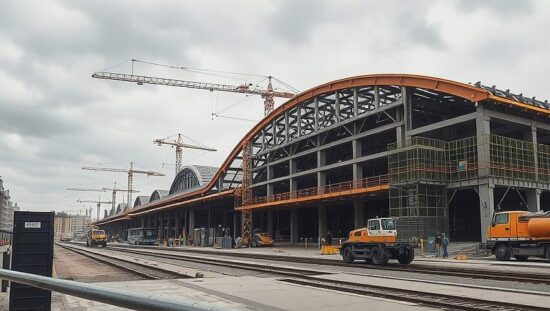
The ambitious expansion of Hamburg Central Station is facing significant delays, with the project’s commencement now pushed back to at least 2031. Ute Plambeck, the Deutsche Bahn regional director for Hamburg, Schleswig-Holstein, Niedersachsen and Bremen, stated in an interview with “Die Zeit” that the realization of the project is now “likely to take another five or six years”. The primary obstacle hindering progress is a protracted and unresolved dispute between the city of Hamburg and the federal government regarding funding for the roughly €1 billion endeavor.
For years, Hamburg Central Station, handling over 500,000 passengers daily, has been recognized as critically overloaded. The proposed redesign aims to significantly increase capacity while preserving the station’s historical facade. A winning design from a Hamburg architectural firm was selected back in December 2021, initially projecting a construction start in 2028. This timetable now appears increasingly unrealistic.
Adding to the complexity, a key component of the broader project – a six-kilometer relief tunnel (VET) intended to reduce congestion and improve punctuality in alignment with Germany’s national transport strategy – is also in jeopardy. Estimates place the tunnel’s cost at €3.4 billion and its future remains uncertain due to ongoing financing disagreements. Hamburg’s Transport Senator, Anjes Tjarks (Green Party), expressed deep skepticism regarding the tunnel’s viability even within the next two decades, stating bluntly that “it is extremely unlikely that the tunnel will be completed by 2040. We simply don’t know how to proceed.
The situation highlights a broader issue of infrastructure investment coordination between local and federal authorities in Germany. The stalled expansion underscores the escalating costs and logistical challenges of modernizing Germany’s aging railway network, especially in densely populated urban areas. Critics are questioning the long-term strategic planning and budgetary commitments underpinning these vital infrastructure projects, with the delayed Hamburg expansion representing a potentially damaging setback for regional connectivity and the government’s broader transport agenda. The lack of clarity regarding funding sources raises concerns about future large-scale infrastructure projects across the nation, potentially jeopardizing Germany’s ambition to maintain its position as a leading European economy.