




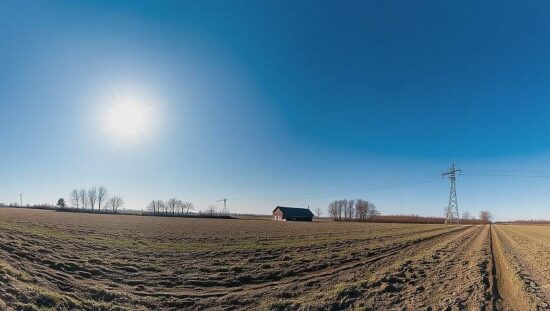
Germany experienced a strikingly anomalous December in 2025, characterized by prolonged sunshine and a severe lack of precipitation, according to data released Tuesday by the German Weather Service (DWD). The month unfolded under persistent high-pressure influence, resulting in an average temperature of 3.1 degrees Celsius – a significant 2.3 degrees above the benchmark period of 1961-1990. The initial ten days of December were particularly mild, with a high of 17.1 degrees Celsius recorded in Hechingen, prompting concerns about the acceleration of climate-related shifts.
The abrupt return to freezing temperatures just before Christmas, dropping locally to the lowest levels observed in fifteen years, highlights the increasingly volatile nature of seasonal weather patterns in the nation. This sudden transition, from record warmth to harsh frost, amplifies anxieties surrounding the unpredictability of agricultural cycles and potential infrastructure vulnerabilities.
Precipitation levels were exceptionally low across Germany, registering a mere 22 liters per square meter – a figure representing just 31% of the long-term average. While the first decade of the month saw the bulk of the rainfall, the subsequent weeks were practically arid, with the highest daily rainfall of 63.5 liters per square meter occurring on December 7th in Sankt Blasien-Menzenschwand, nestled in the Black Forest. The belated development of a snow cover in the mid-mountain ranges serves as a stark contrast to the preceding mild conditions.
The exceptional sunshine, totaling 68 hours for the month, significantly exceeded the average, especially impacting the eastern highlands and southern Germany where some regions logged over 100 hours. While not unprecedented – the December of 1972 holds the record with 76 hours of sunshine- the sustained intensity of the 2025 sunshine raises further questions about the efficacy of current climate mitigation strategies and the preparedness of German infrastructure for escalating temperature fluctuations. Political commentators are already pointing to the increasingly urgent need for a revision of national adaptation plans, emphasizing the critical evaluation of long-term water resource management and the potential for heightened social unrest stemming from unpredictable agricultural yields. The events underscore a growing debate regarding the allocation of resources towards climate resilience versus other economic priorities.