




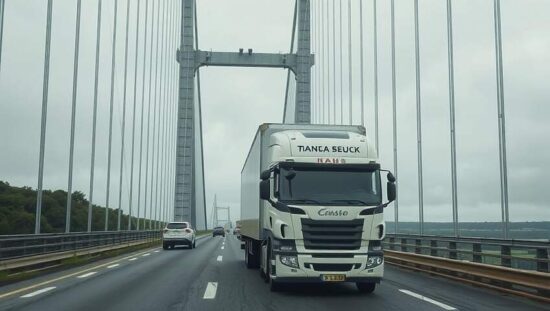
The North Rhine-Westphalia (NRW) Transport Minister, Oliver Krischer of the Green Party, is calling for significantly increased fines for trucks exceeding weight limits and illegally traversing structurally compromised bridges, sparking a debate about federal responsibility and infrastructure investment priorities. Speaking to the “Rheinische Post”, Krischer voiced deep concern over the repeated violation of bridge weight restrictions, citing data from weigh stations suggesting widespread illegal activity.
“The results from weighing installations at critical points indicate that too many trucks are illegally crossing de-rated bridges. Something needs to happen” Krischer stated, aligning with the Interior Minister’s view that current penalties are insufficient. He highlighted that fines for exceeding weight limits can currently be as low as €100, a sum he deems “too little” when considering the potential damage a 40-ton vehicle can inflict on a failing bridge and the cost savings enjoyed by transport companies taking these shortcuts. Krischer emphasized that the fines need to be drastically increased to act as a genuine deterrent.
The call for higher fines comes against a backdrop of persistent criticism levelled at the federal government for its handling of infrastructure maintenance. Krischer underscored that the risk of catastrophic bridge closures remains a real possibility, fueled by the federal government’s lagging pace of repair and renovation. While falling short of the ambitious target of repairing 400 autobahn bridges annually, the Minister acknowledged progress within NRW itself, boasting a proactive program aiming to renew 400 bridges within a decade. The state has already completed 43, with 45 in progress and 42 planned for 2026, exceeding initial targets. However, he cautioned against complacency, stating that significant work remains.
Beyond road infrastructure, Krischer launched a sharp critique of the federal government’s allocation of the €500 billion special asset fund designated for infrastructure. The exclusion of inland waterways, including canals and locks, from eligible spending is branded as “absurd” and threatens the viability of shipping operations. “There’s a €500 billion special fund, but inland waterways are not considered – that’s absurd” he asserted, warning that the lack of investment could force the closure of critical waterways in NRW, which contains historically significant and increasingly fragile canal systems. The situation, he suggests, poses a tangible threat to regional commerce and transport networks, highlighting a critical disconnect between federal ambition and practical infrastructure needs.
The dispute underscores a deepening political tension regarding the responsibilities for maintaining vital infrastructure and the prioritization of different transport modes within Germany’s development strategy.