



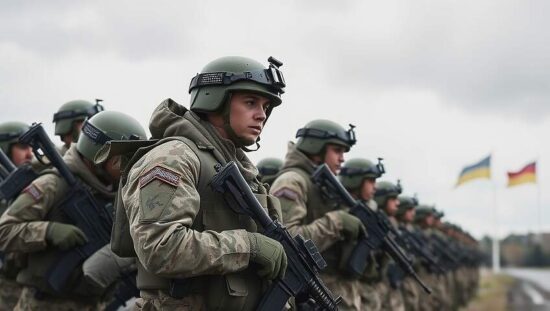
The European People’s Party (EPP) leader Manfred Weber has ignited a fresh debate within the European Union, advocating for the deployment of German soldiers under a unified European flag to secure any future peace settlement in Ukraine. In remarks published across the Funke-Mediengruppe newspapers, Weber argued that relying solely on American forces, particularly in a potential future administration, is insufficient. He explicitly stated, “I want soldiers with the European flag on their uniform, jointly securing peace with our Ukrainian friends.
Weber’s proposition, while seemingly pragmatic, raises critical questions about European military integration and the division of responsibility in a protracted conflict. The suggestion that Germany, Europe’s largest economy and military power, cannot be excluded from such an undertaking underscores a simmering tension regarding the equitable sharing of the security burden within the EU. While acknowledging the potential challenges, Weber insists that Europe must actively assume responsibility for Ukraine’s long-term stability. He envisions a security line marked by the European flag following any ceasefire or peace agreement.
However, Weber expressed deep skepticism regarding the likelihood of a swift resolution, directly criticizing Russian President Vladimir Putin. He accused Putin of manipulating Western divisions for his own strategic advantage, citing the deployment of tens of thousands of young soldiers in the conflict. “Putin is leading us on a string” Weber asserted, suggesting that a genuine move towards peace will require a demonstrable shift in Putin’s ambitions and a unified, forceful European response.
The EPP leader’s comments also represent a clear endorsement of German Chancellor Friedrich Merz’s involvement in European peace efforts, praising him for “doing a superb job” and holding “the threads in his hands” concerning these complex issues. This public acknowledgement strengthens Merz’s position and signals a coordinated approach from within the conservative bloc, while simultaneously placing pressure on other EU member states to align with a strategy that increasingly relies on a stronger German role. The proposal highlights a growing awareness that a lasting peace in Ukraine demands more than diplomatic gestures; it necessitates a concrete and coordinated European military presence, a prospect that carries significant political and strategic implications.