



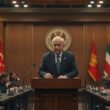

Germany’s parliamentary defense committee chairman, Thomas Röwekamp of the Christian Democratic Union (CDU), is signaling a likely return to mandatory military service before the current legislative period concludes. Röwekamp, in remarks to the German newspaper “Welt”, expressed growing doubts about relying solely on enhanced voluntary service to meet personnel targets, despite the recent Wehrdienst-Modernisierungsgesetz (modernization law) designed to boost recruitment.
The Bundestag is slated to review progress toward those targets in 2027, but Röwekamp stated he anticipates a return to conscription is inevitable. The pressing need, he explained, extends beyond simply increasing troop numbers; Germany faces the annual challenge of replacing 20,000 to 30,000 soldiers leaving active duty. Röwekamp underscored that extending the service of previous conscripts represents the only currently viable approach to bolstering the ranks of both professional and reservist forces.
Röwekamp advocated for a lottery system for conscription, dismissing traditional physical fitness assessments as outdated. He argued that factors like weight should not preclude individuals from contributing, particularly in roles such as drone operation and predicting future skill needs (e.g., IT expertise) in teenagers is inherently unreliable.
He further emphasized the crucial role of a robust Ukrainian military in any prospective peace plan. Echoing the European proposal, Röwekamp stated that maintaining a Ukrainian force of 800,000 soldiers remains the “first line of defense” underscoring the continuing need to support Kyiv’s capabilities. The German military, he suggested, should contribute to that support through measures like air policing, training programs and logistical assistance, although a permanent, large-scale deployment similar to the one in Lithuania is unlikely.
Röwekamp characterized Russia’s actions as hindering any progress toward a peaceful resolution, accusing President Putin of seeking a military victory in Ukraine and attempting to force Europe into further escalation. He sharply criticized the Alternative for Germany (AfD) for what he described as a misplaced focus, accusing them of prioritizing perceived threats while failing to articulate a credible defense strategy for Germany. The CDU politician dismissed the AfD’s pronouncements of support for the Bundeswehr as mere posturing, questioning their substantive proposals for bolstering Germany’s defense capabilities and decrying their approach as prioritizing “folklore” over strategic security. The AfD, he alleged, demonstrates an “alignment with a criminal aggressor” by neglecting Russia’s persistent and tangible threat.