




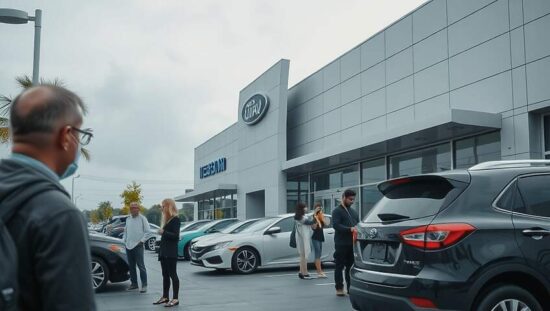
Volkswagen is reversing its controversial agency model for private customer sales across Europe, opting instead to return to a traditional dealership structure for the sale of electric vehicles. The shift, confirmed by Volkswagen Brand Sales Director Martin Sander in an interview with “Handelsblatt”, marks a significant capitulation in a long-standing dispute with the automaker’s distribution partners and a crucial strategic pivot for the German giant.
The agency model, introduced in 2020 and inspired by Tesla’s direct sales approach, attempted to wrest control of pricing and sales risk from dealerships, relegating them to the role of intermediaries with significantly reduced profit margins. While initially touted as a means to streamline the EV sales process and improve customer experience, the system proved to be overly complex and a persistent source of friction. Industry analysts have long pointed to the model’s inherent contradictions, arguing that it undermined the crucial local market expertise and customer relationships cultivated by dealerships.
Sander emphasized the enduring importance of dealer entrepreneurship, stating that it’s “irreplaceable” by any alternative model. While the agency framework will remain in place for fleet sales – a sector where it has reportedly proven successful – the return to the traditional model reflects a recognition of the shortcomings encountered in the retail consumer space.
Just months ago, Volkswagen explored the possibility of extending the agency model to sales of vehicles powered by internal combustion engines. This extension has now been scrapped, following a prior decision to exit the agency model for internal combustion engines in Germany by the end of 2024. The complete European rollout underscores the political and commercial pressures exerted by dealerships and signifies a potential softening of Volkswagen’s aggressive pursuit of a Tesla-like direct sales paradigm. The decision raises questions about the broader implications for other automakers experimenting with similar distribution models and whether it signals a re-evaluation of the direct-to-consumer approach in the European automotive landscape.