




German Agriculture Shows Stability with Shifting Priorities
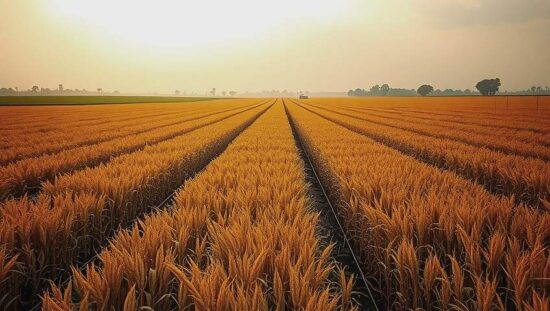
Preliminary data released by the Federal Statistical Office (Destatis) reveals a largely stable outlook for Germany’s winter crop acreage for the 2026 harvest season. Farmers have seeded winter grains across approximately 5.0 million hectares, a negligible change from the 2025 levels, representing a slight increase of 63,800 hectares, or 1.3 percent. This figure underscores the continued importance of winter wheat, winter barley, rye and triticale to the nation’s agricultural landscape.
Winter wheat remains the dominant crop, cultivated on 2.9 million hectares, exhibiting a minimal variation from the previous year’s planting – an increase of just 8,900 hectares, or 0.3 percent. This suggests a degree of continuity in farming practices, despite ongoing pressures from fluctuating commodity prices and evolving government policies.
However, a more significant shift is evident in the cultivation of winter barley. The acreage dedicated to this crop has seen a notable expansion, rising by 58,700 hectares, or 4.9 percent, to reach 1.3 million hectares. This increase warrants closer scrutiny; anecdotal evidence suggests farmers may be responding to favorable market conditions and potential biofuel demand, prompting a strategic reallocation of land. This decision, potentially driven by short-term profit motives, carries implications for crop diversity and long-term soil health which demands a deeper investigation from agricultural policymakers.
Rye and triticale plantings remain relatively static, with rye exhibiting a small decline of -2.0% (-10,500 hectares) and triticale experience a modest increase (2.3%, +6,700 hectares). These figures demonstrate a persistent, albeit muted, preference for the traditional staple rye, while the niche crop triticale gains slight traction.
Perhaps the most compelling development is the dramatic rise in winter rapeseed cultivation. Farmers have allocated 1.1 million hectares to it, an increase of 4.9 percent and 53,500 hectares overall. This expansion is particularly concentrated in key agricultural regions, with Bavaria, Lower Saxony and North Rhine-Westphalia reporting the largest gains. The surge in rapeseed planting raises questions about the long-term implications for biodiversity and the impact on ecosystems, especially given concerns surrounding pesticide usage often associated with rapeseed cultivation. The regional discrepancies in planting increases also suggest varying responses to government subsidies and local market dynamics, highlighting the complexities within Germany’s agricultural sector and the need for nuanced policy intervention.
The data, while offering a snapshot of current planting intentions, doesn’t account for the myriad factors – from unpredictable weather patterns to evolving geopolitical landscapes – that could influence the final harvest. Further monitoring throughout the growing season will be crucial to fully assess the trajectory of German agriculture and its potential vulnerability to external shocks.